


 11
11
Something unusual has happened to one of crypto’s most reliable trading strategies. The bitcoin futures yield collapse now underway means a bet that once handed traders more than 20% annual returns has quietly fallen behind the safest instrument in finance: the short-term U.S. Treasury note. What used to be a near-guaranteed edge for carry traders has turned into a losing proposition compared with simply parking money in government debt.
Key takeaways
- During the 2021 bull market, the bitcoin futures carry trade regularly yielded over 20%, according to data cited by Glassnode.
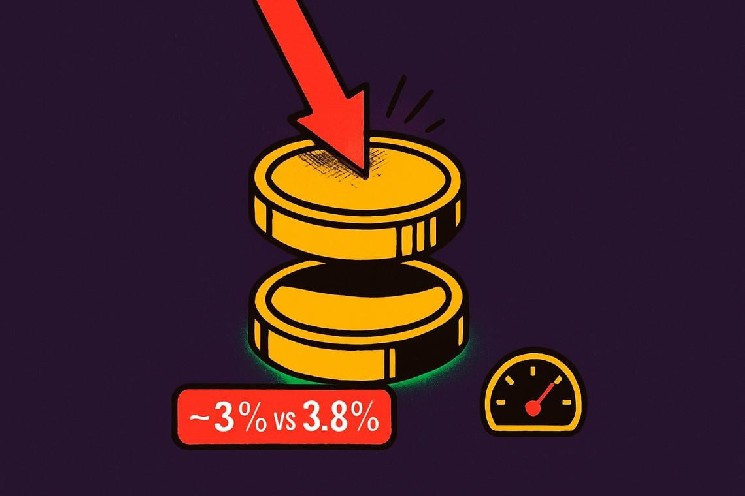
- Since February 2026, that same trade has paid less than short-term U.S. Treasuries, with current returns of about 3% versus an average 3.8% yield on two-year Treasuries.
- The three-month bitcoin futures basis has trailed the two-year Treasury note for 157 consecutive days, one of the longest such stretches on record.
- Bitcoin futures trading volume dropped from a peak of $1.47 trillion in February 2026 to roughly $880 million in July, according to Coinglass.
- Analysts say the shrinking basis actually points to greater liquidity and a maturing derivatives market, not necessarily a warning sign.
Collapse of Bitcoin Futures Carry Trade Yields
The bitcoin futures carry trade has flipped from a lucrative arbitrage play into a strategy that now underperforms plain government debt. That single fact frames the entire story behind this bitcoin futures yield collapse.
High yields during the 2021 bull market
Back in 2021, the trade was almost too good to pass up. Carry trades consistently yielded 20% or more across both regulated and unregulated crypto exchanges during that bull run. The mechanics were straightforward: traders would short bitcoin futures while simultaneously buying a spot exchange-traded fund, pocketing the spread between the two prices — known in trading circles as the basis.
Shift to lower yields underperforming US Treasuries since 2026
That spread has essentially dried up. Since February, the trade has consistently paid less than short-term U.S. Treasuries every single month. Today it returns about 3%, compared with an average 3.8% yield on two-year Treasuries — a gap that makes the once-popular strategy look far less attractive next to a risk-free alternative.
Glassnode, the data source that has been tracking this trend, put the duration in stark terms. In a post on Telegram, the firm noted that the three-month futures basis has paid less than a two-year Treasury since February, adding that “only one other stretch on record has run this long: August 2022 into January 2023,” a period that ended at the cycle low. According to Glassnode’s Sunday chart, the three-month basis has now underperformed the two-year Treasury note for 157 days straight.
Why this matters: when a carry trade pays less than a risk-free government bond, the incentive to deploy capital into it largely disappears. A dollar sitting in the bitcoin futures carry trade now earns less than the same dollar would sitting in Treasury paper — a shift that reshapes how allocators think about crypto derivatives strategies altogether.
Impact on Trading Volumes and Market Participation
Fading carry returns have coincided with a sharp drop in how much money moves through bitcoin futures markets, and the two trends are closely linked. When the reward for holding a position shrinks, fewer traders bother to hold it.
Decline in bitcoin futures trading volume
The numbers tell the story clearly. Bitcoin futures trading volume peaked at $1.47 trillion in February 2026, according to Coinglass. By July, that figure had collapsed to just over $880 million — a decline that extends well beyond typical seasonal fluctuations and points to a structural shift in trader behavior.
Role of the crypto bear market in reduced activity
Slumping carry returns aren’t the only factor at play. A broader crypto bear market has also weighed on futures volumes, discouraging speculative positioning across the board. Together, these two forces — a vanishing yield edge and weaker overall market sentiment — help explain why activity in bitcoin futures has thinned out so dramatically since its February peak.
Market Maturation and Efficiency Signals
A shrinking basis usually sounds like bad news for traders chasing yield, but it actually signals something healthier for the market as a whole. That’s the counterintuitive read from analysts watching this bitcoin futures yield collapse unfold.
Implications of collapsing bitcoin futures basis
The basis trade exists to profit from price discrepancies between linked markets — in this case, the gap between futures and spot bitcoin prices. When that gap narrows, it means those discrepancies are shrinking too. In practical terms, a collapsing yield signals greater liquidity and a market that is becoming more efficient at pricing risk.
Effects on liquidity, bid-ask spreads, and arbitrage
Greater efficiency carries real consequences for how the market functions day to day. Tighter bid-ask spreads make it cheaper to trade. Easier hedging gives institutional players more confidence to manage risk. And fewer outsized arbitrage opportunities mean the kind of easy 20%-plus returns seen in 2021 are unlikely to return anytime soon, at least not without a fresh wave of volatility or dislocation reopening the gap between futures and spot prices.
This is the paradox at the heart of the story: the same trend that’s squeezing carry traders out of profits is the one making bitcoin’s futures market look more like a mature, institutional-grade venue rather than the wild, inefficiency-riddled arena it was during the last bull cycle.
FAQ
What caused the collapse in bitcoin futures carry trade yields?
The broader crypto bear market and slumping carry returns are cited as contributing factors, though the exact underlying causes beyond general market weakness aren’t specified in the available data.
How does the bitcoin futures yield compare to US Treasury yields currently?
Since February 2026, the bitcoin futures carry trade has yielded about 3%, below the average 3.8% yield on two-year U.S. Treasuries.
What are the market implications of declining bitcoin futures basis?
A collapsing basis signals shrinking price inefficiencies, greater liquidity, and market maturation — leading to tighter bid-ask spreads, easier hedging, and fewer arbitrage opportunities for traders.
How has the trading volume of bitcoin futures changed recently?
Trading volume dropped from a peak of $1.47 trillion in February 2026 to about $880 million in July 2026, according to Coinglass.
Article produced with the assistance of artificial intelligence and reviewed by the editorial team.

 en.bitcoinsistemi.com


