


 2
2
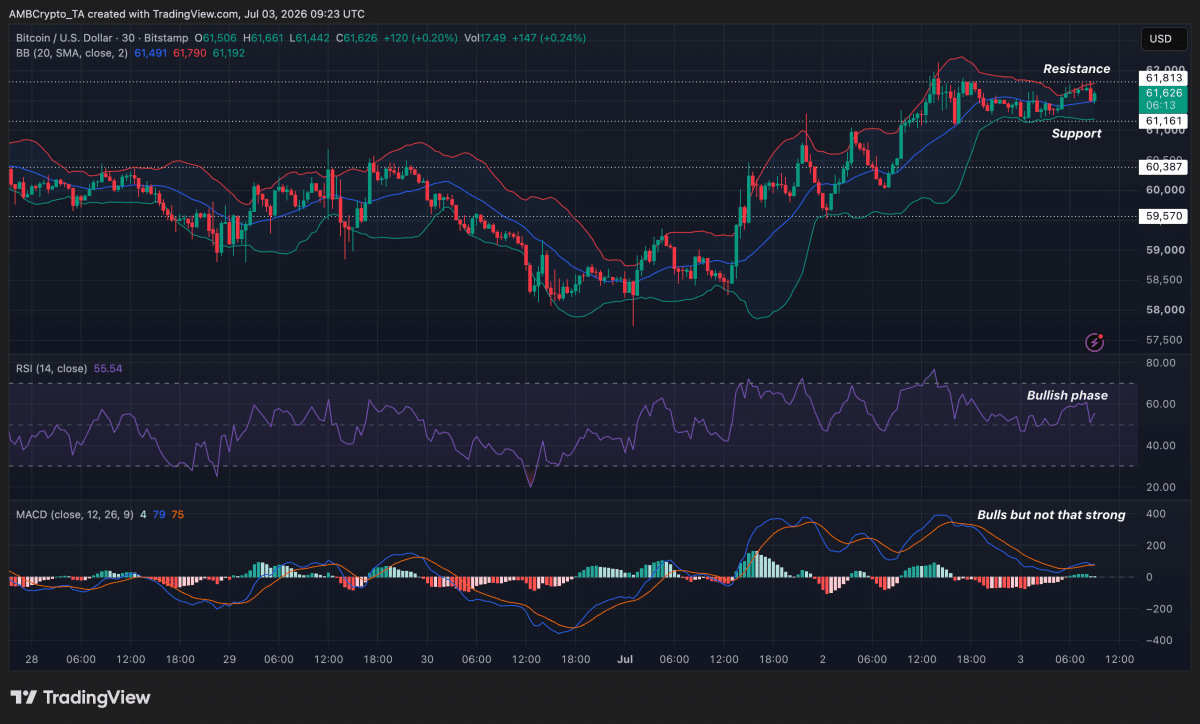
The price of Bitcoin [$BTC] recently dropped from $60,000 to $58,000. However, at press time it was trading at $61,540.15, following a 2.01% increase in the past 24 hours. But a month-long decline of 8% is now raising concerns for the king coin.
Consequently, given that the RSI was above 55 at press time and the MACD was flashing green bars, the price analysis suggested that bulls were strong. However, if looked at closely, the bull signs were not forceful, as the Signal line and MACD lines were almost joining.
Additionally, Bollinger Bands expanding following a squeeze indicated the presence of upcoming volatility.
Bitcoin’s on-chain metrics spark concerns
Still, instead of being completely pessimistic, CryptoQuant’s most recent CME Bitcoin futures data suggested a market reset.
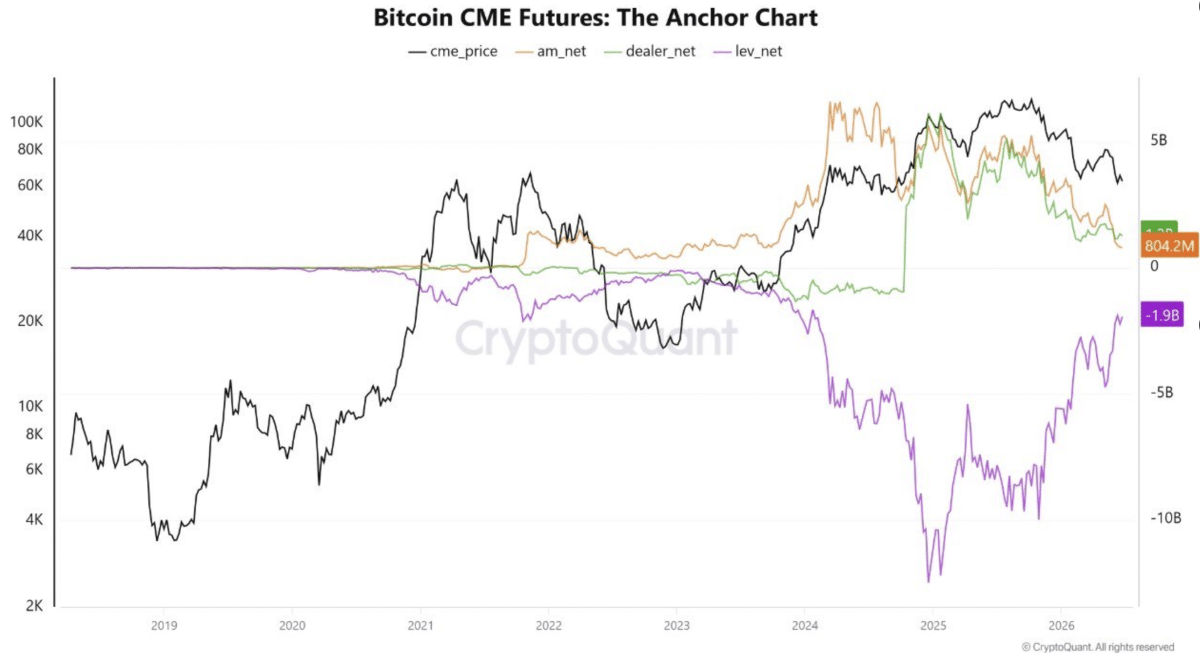
According to the chart, the net long exposure of asset managers has decreased to $800 million, the lowest since the introduction of U.S. spot Bitcoin ETFs. However, they still maintain a nearly 2:1 long-to-short ratio, indicating a decrease in conviction rather than a bearish shift.
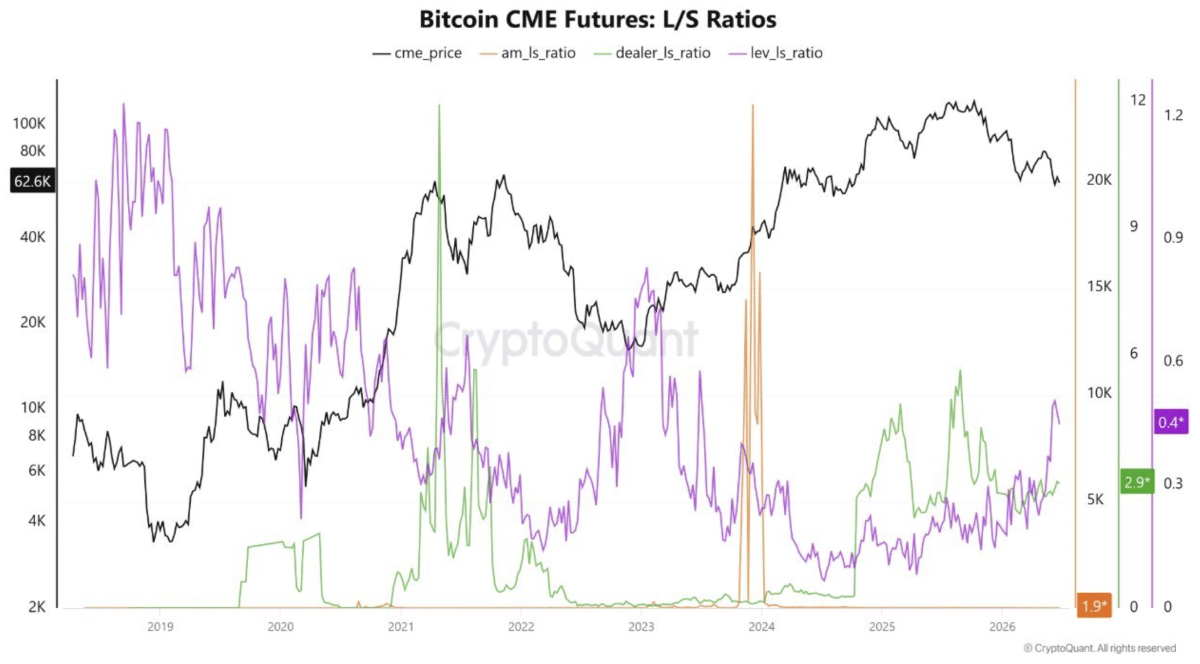
Meanwhile, the leveraged funds have cut their net short positions by 67.5% as shrinking futures premiums made basis trades less profitable.
Moreover, open interest has decreased by 63.5%, which is significantly greater than the decline in Bitcoin’s price. This suggests that leverage is being removed from the derivatives market rather than being sold off on the open market.
Therefore, there is now a positioning vacuum as a result of both bullish and hedging positions being abnormally light. Similar conditions existed in November 2022 before Bitcoin’s 30% rally, but the market environment was different this time due to the presence of spot ETFs.
Hence, if institutional longs or hedge fund basis trades return first, that will probably determine the next big move.
Has the bullish narrative started to build yet?
At the same time, long-term holders (LTHs) intervened to buy Bitcoin at reduced prices, easing selling pressure and creating a solid price floor. This in turn resulted in the bearish momentum swiftly subsiding.
This aided in Bitcoin’s recovery above a crucial technical level.
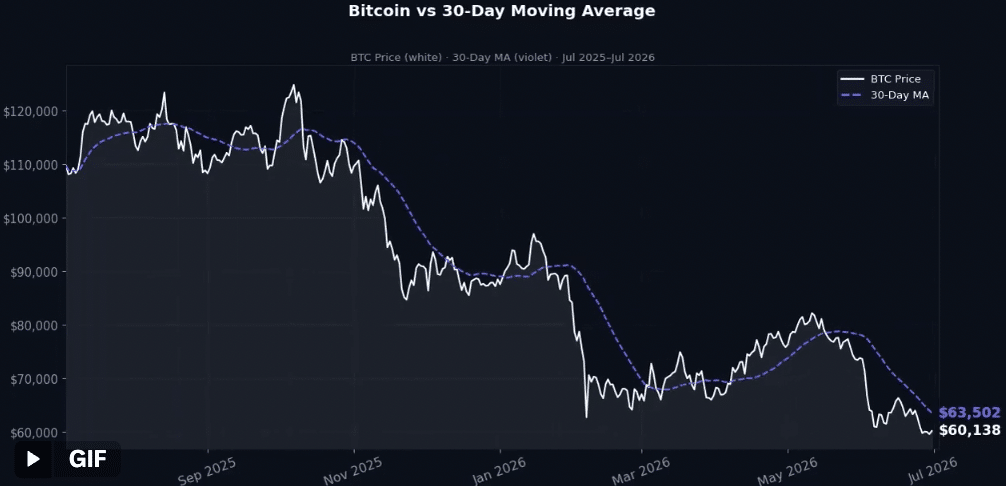
Although Bitcoin has gained 2.9% weekly and is now above its 7-day moving average, it is still below its 30-day moving average, indicating that while short-term momentum is improving, the overall trend has not yet fully turned bullish.
Asset reshuffling
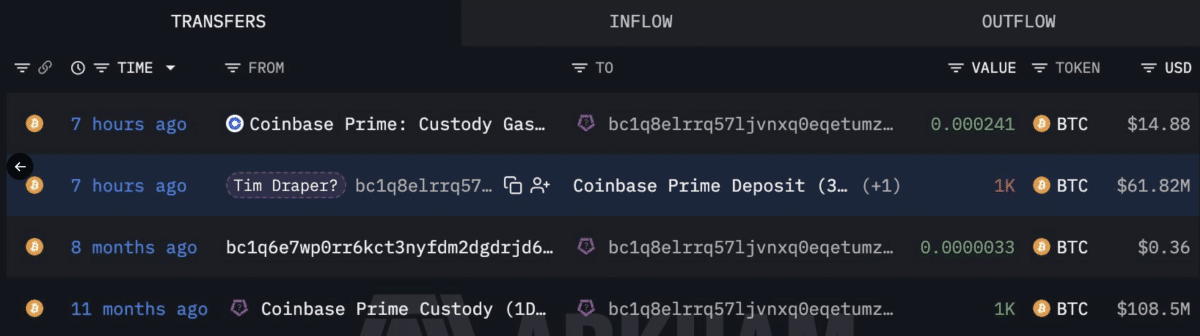
While all this was happening, 1,000 $BTC worth $61.8 million was transferred to Coinbase Prime from a wallet that may have been connected to Tim Draper.
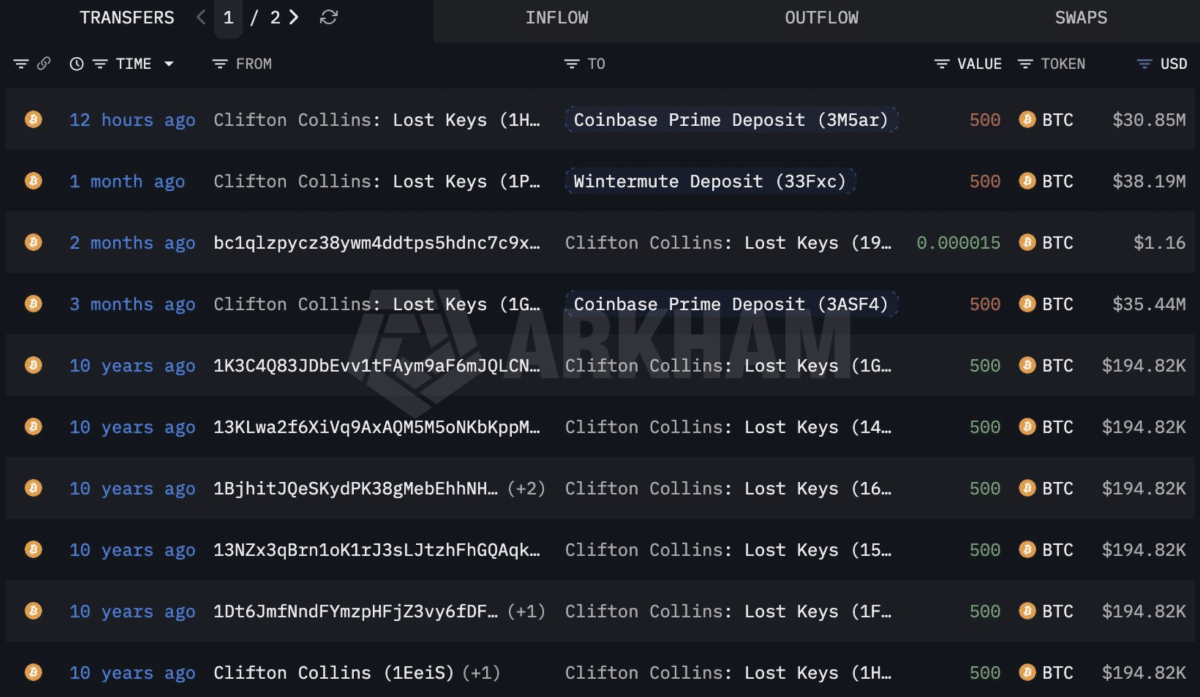
Additionally, a wallet associated with Clifton Collins, meanwhile, moved 1,500 $BTC to Coinbase Prime and Wintermute over the previous three months and then deposited an additional 500 $BTC ($30.9 million) to Coinbase Prime.
Though these transfers raise the possibility of more supply entering the market, they do not always signify an immediate selling.
Clubbing all these together, even, crypto analyst Axel Adler Jr. recently claimed that on-chain metrics indicate that there is still more downside risk. This is because Bitcoin has not yet reached the severely oversold conditions observed at previous cycle bottoms.
Final Summary
- Even though Bitcoin has risen above $61,500, it is still below its 30-day moving average.
- ETF withdrawals and sell-offs continue to be the main factors influencing Bitcoin’s current and future price movement.

 crypto-economy.com
 cryptopolitan.com
 news.bitcoin.com