

 4
4
Professional investors cut their bitcoin ETF exposure sharply during the first quarter of 2026, but fresh filings show banks, advisors, and sovereign entities continued adding positions despite a deep market downturn.
-
Key Takeaways:
- Coinshares reported 52.5K $BTC sold by 13F filers in Q1 2026.
- JPMorgan and Wells Fargo lifted bitcoin exposure as hedge funds cut 39%.
- Bitcoin ETF inflows topped $2.3B by mid-May, shifting focus to Q2 filings.
The Great Bitcoin ETF Shakeout, Coinshares Shows Which Investors Lost Conviction
According to a recent report from Coinshares Digital Asset Analyst Matt Kimmell, professional bitcoin holdings fell from 313,000 $BTC equivalent to 261,000 $BTC, a 17% quarter-over-quarter decline. The total value of those holdings dropped 35% to $17.8 billion.
The report characterizes the decline as the largest quarterly reduction in professional ownership since U.S. spot bitcoin ETFs began trading. The share of ETF assets held by 13F filers also declined from 24.7% to 20.8%.
Selling Concentrated Among Traders
Kimmell found that hedge funds and brokerages accounted for roughly 95% of the exposure reduction.
Hedge funds reduced holdings by 31,400 $BTC, representing a 39% quarterly decline. Brokerages shed 18,800 $BTC, a 53% drop. Together, those groups drove nearly all of the professional selling during the quarter.
Kimmell further noted that negative perpetual futures funding rates and the unwinding of basis trades likely contributed to hedge fund exits. Capital competition from artificial intelligence (AI) investments and precious metals may have also influenced allocation decisions.
Strategy boss Michael Saylor described a similar theory on Thursday, a few days after his firm revealed selling 32 $BTC for the first time since 2022. “Capital markets are funding the AI buildout at historic scale: ~$400B over 6 months,” Saylor explained on X. “ Bitcoin ETFs have seen ~$4B of outflows since May 14, pressuring $BTC. This is a capital rotation, not a bitcoin impairment.”
Advisors and Banks Hold Firm
While traders reduced exposure, advisors remained the largest professional cohort with approximately 150,300 $BTC, accounting for about 58% of all reported professional holdings. Advisors trimmed positions by just 5.9% during the quarter and remain up 20% year over year.
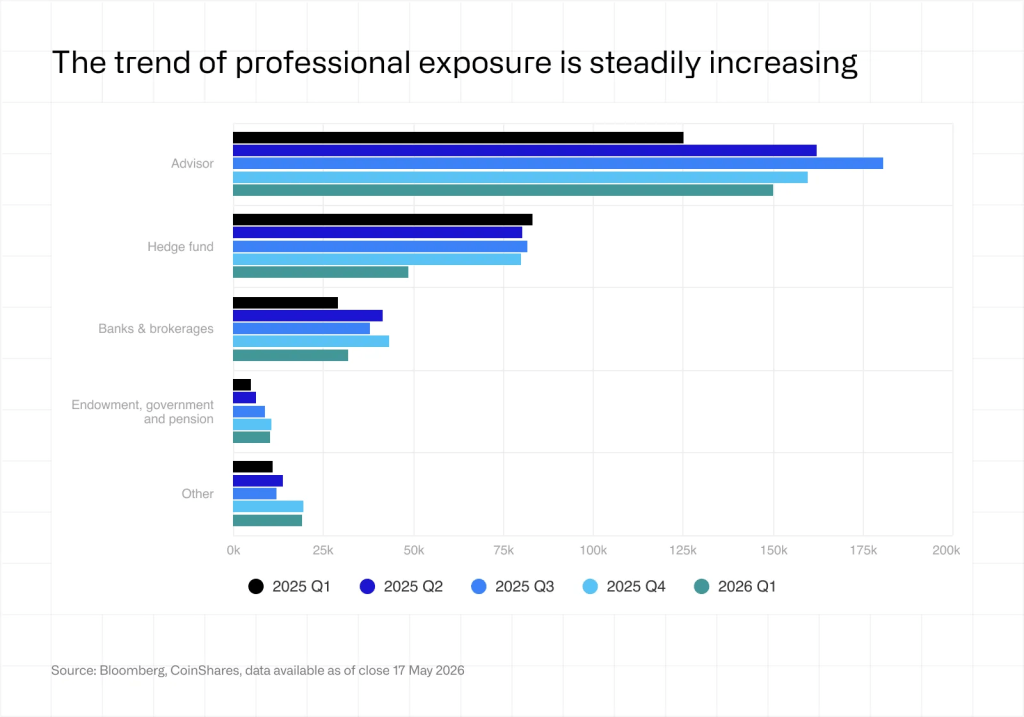
Banks were among the fastest-growing categories, the Coinshares report notes. Their bitcoin exposure climbed to roughly 15,200 $BTC, more than doubling during the quarter and rising 339% from a year earlier. JPMorgan Chase added 3,000 $BTC, Wells Fargo added 4,000 $BTC and Citigroup appeared in filings for the first time.
Government entities also expanded exposure. The Emirate of Abu Dhabi’s Mubadala Fund added approximately 1,100 $BTC, bringing sovereign holdings to about 8,300 $BTC.
What It Means for Investors
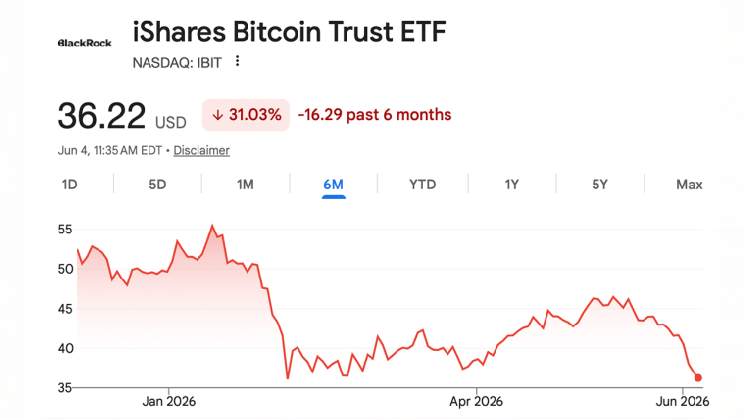
Bitcoin fell 22% during Q1, ending the quarter near $68,000 after briefly dropping below $60,000. The decline marked roughly a 50% correction from the October 2025 all-time high above $126,000. During that period, on-chain metrics recorded the largest realized losses since July 2023 while sentiment indicators reached historic lows.
Despite the selloff, Coinshares argues the data suggests a distinction between tactical traders and long-term allocators. Leveraged participants reduced risk, while advisors, banks, and sovereign entities largely maintained or expanded strategic exposure.
Since Q1 ended, conditions have improved. U.S. spot bitcoin ETFs attracted roughly $2.3 billion in net inflows through mid-May, and combined ETF and digital asset treasury flows approached $6.4 billion. Investors will closely watch Q2 filings in August to determine whether professional buying resumed as market conditions stabilized.

 en.bitcoinsistemi.com
 bitcoinworld.co.in
 u.today
 1
1
 bitcoinmagazine.com