



 8
8
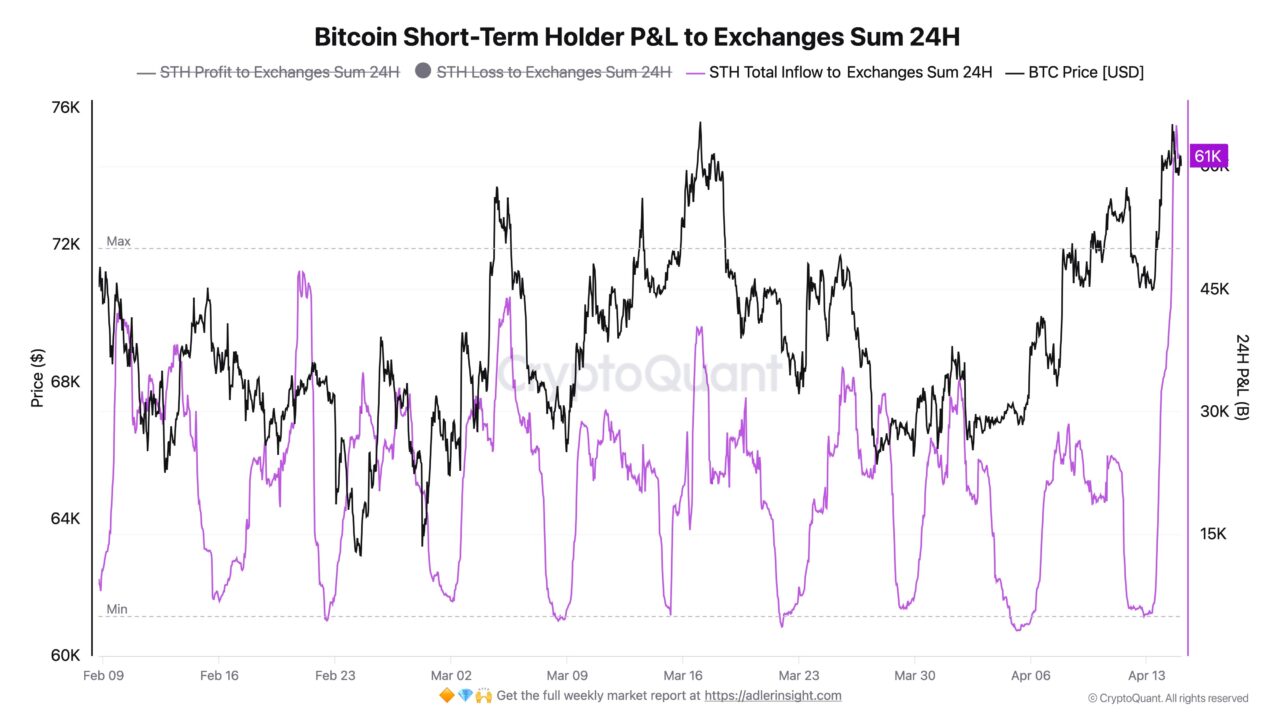
Bitcoin’s [$BTC] move toward $75,000 begins to trigger a clear behavioral shift, as Short-Term Holders (STH) send coins to exchanges in size.
Within 24 hours, over 65,000 $BTC were moved, with 61,000 $BTC realized in profit, indicating that recent buyers see strength as an exit window. Many traders entered lower and are now securing gains, creating visible sell pressure near resistance and slowing momentum.
Yet, the broader supply tells a different story, as Wholecoiners inflows fall to around 27,500 $BTC globally, far below the 80,000 $BTC peak in 2018. Binance flows average near 6,000 $BTC, reinforcing reduced long-term selling and tighter supply conditions.
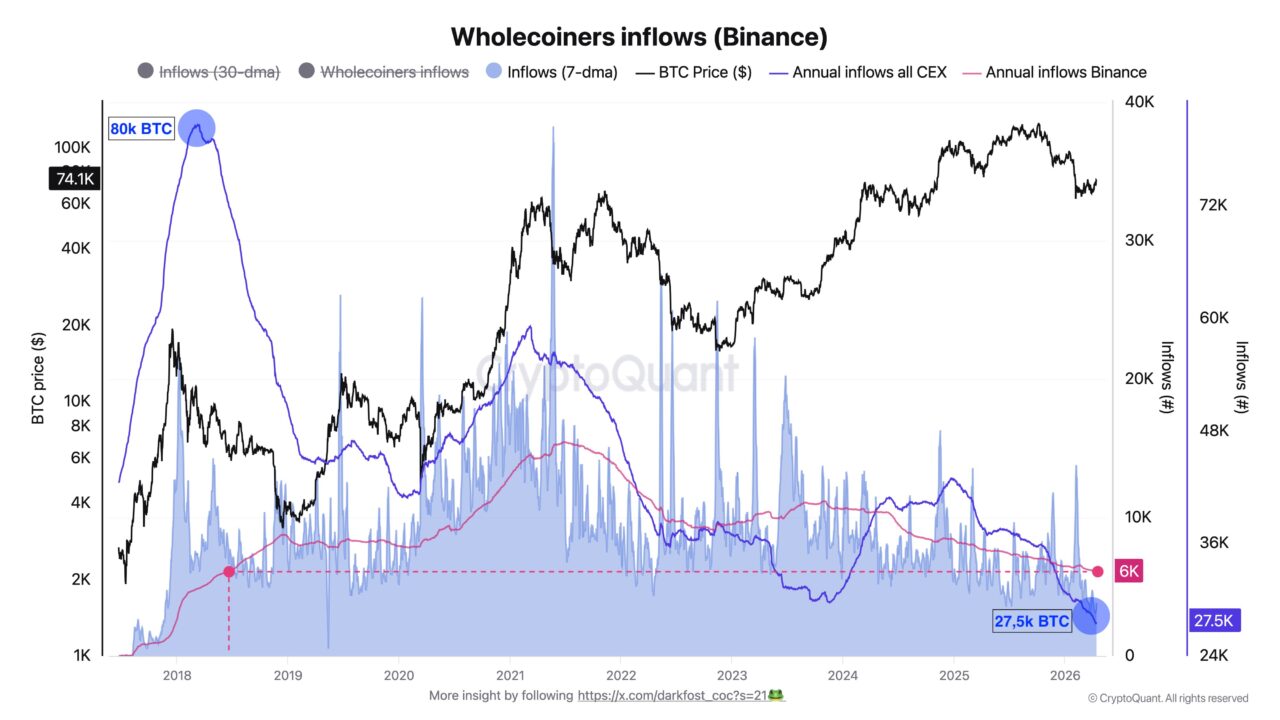
This divergence reveals rotation, where short-term selling tests demand, while limited long-term supply forces price to rely on buyer strength.
LTH dominance tightens Bitcoin supply
This rotation between short-term selling and constrained supply begins to shape how Bitcoin behaves near resistance.
As the price approaches the $73,000 to $75,000 zone, STH continues circulating supply, reacting quickly to volatility, and using strength to exit positions. This keeps visible sell pressure active, especially during upward moves.
However, HODL waves reveal a deeper shift in control. Older age bands, especially 2y+ and 5y+ cohorts, continue expanding, while younger bands remain compressed. This implies Long-Term Holders (LTH) are not distributing but steadily absorbing supply over time. As a result, available liquid supply tightens, making price more sensitive to incoming demand.
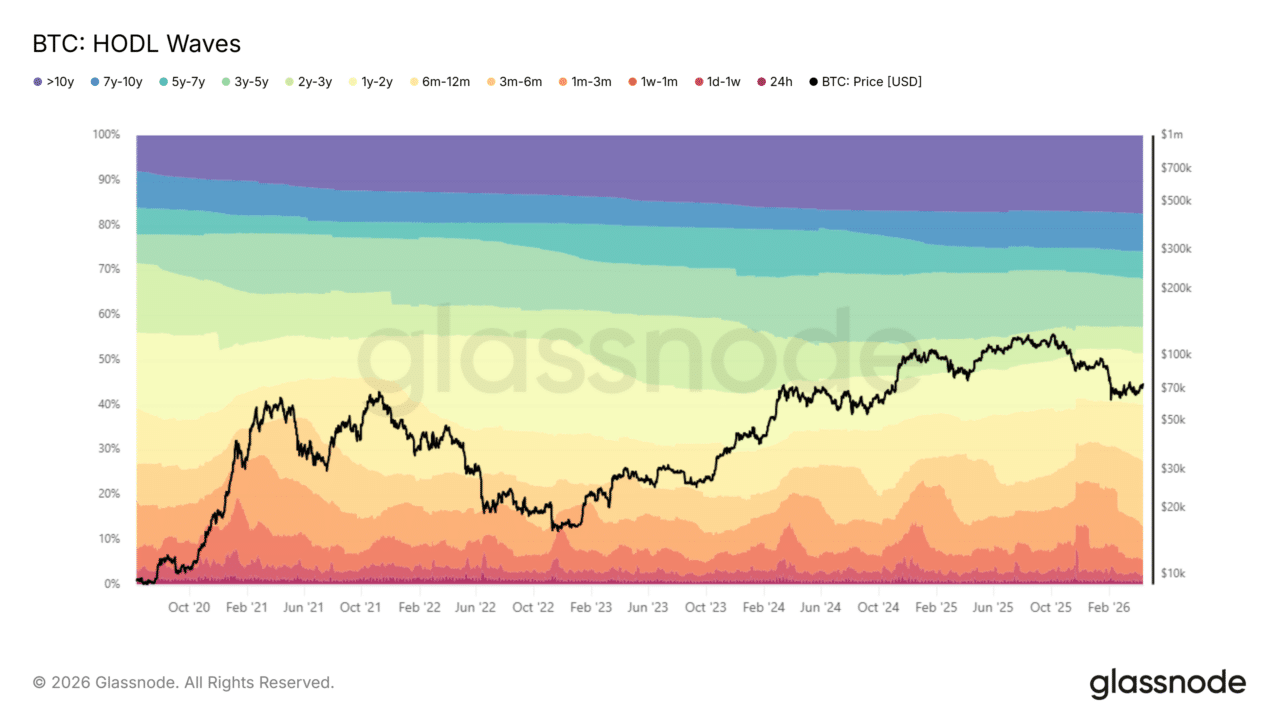
At the same time, declining Wholecoiners inflows confirm fewer large holders are moving coins to exchanges, reinforcing reduced structural selling pressure.
This creates a tension point, where short-term selling tests demand, while long-term conviction supports price resilience near resistance.
Bitcoin absorbs selling as liquidity tightens
Bitcoin’s liquidity behavior begins to reveal how strength forms beneath the surface. Exchange Reserves continue to decline, with CoinGlass data indicating them near 2.45 million $BTC. This reduction matters because fewer coins remain on exchanges, which limits immediate sell-side pressure.
As coins move off exchanges, they shift into less reactive wallets, which lowers the market’s sensitivity to short-term selling. Price reflects this shift, holding between $73,900 and $74,400 despite periodic inflows from STH taking profits. This shows demand is stepping in, absorbing supply without sharp downside reactions.
However, this balance is not one-sided. If absorption weakens, the same inflows could trigger faster declines. For now, steady price and narrowing volatility suggest a buildup phase, where sustained demand could push Bitcoin higher, while fading interest risks renewed downside pressure.
Final Summary
- Bitcoin faces short-term selling near $75,000, yet tightening supply limits downside pressure.
- $BTC remains in absorption, where demand must offset selling or risk rejection.

 coindesk.com
 coinpedia.org
 en.bitcoinsistemi.com
 1
1
