


 1
1

 4
4
The corporate Bitcoin treasury market is facing a serious ideological and financial challenge, according to Caprivoli Investments founder Charles Edwards. Known for his criticism of Bitcoin’s vulnerability to quantum technologies, though that is not the focus here, Edwards has published a series of scathing posts, with the core message that the strategy of turning companies into Bitcoin funds is failing in real time.
Locked leverage on $BTC is destroying shareholder value, says Edwards
Edwards argues that the financial engineering of major players, such as Strategy and Metaplanet, has backfired. According to his data, Strategy (MSTR) is currently down 13% in its $BTC position. He emphasizes that the use of complex debt structures and so-called “fashionable tickers” has proven less effective than simply allocating capital into traditional U.S. Treasury bonds.
MetaPlanet, a Japanese company, is, in his view, in an even worse position. With an average entry price of $105,000 at current market levels, Edwards claims it is facing a severe balance sheet deficit.
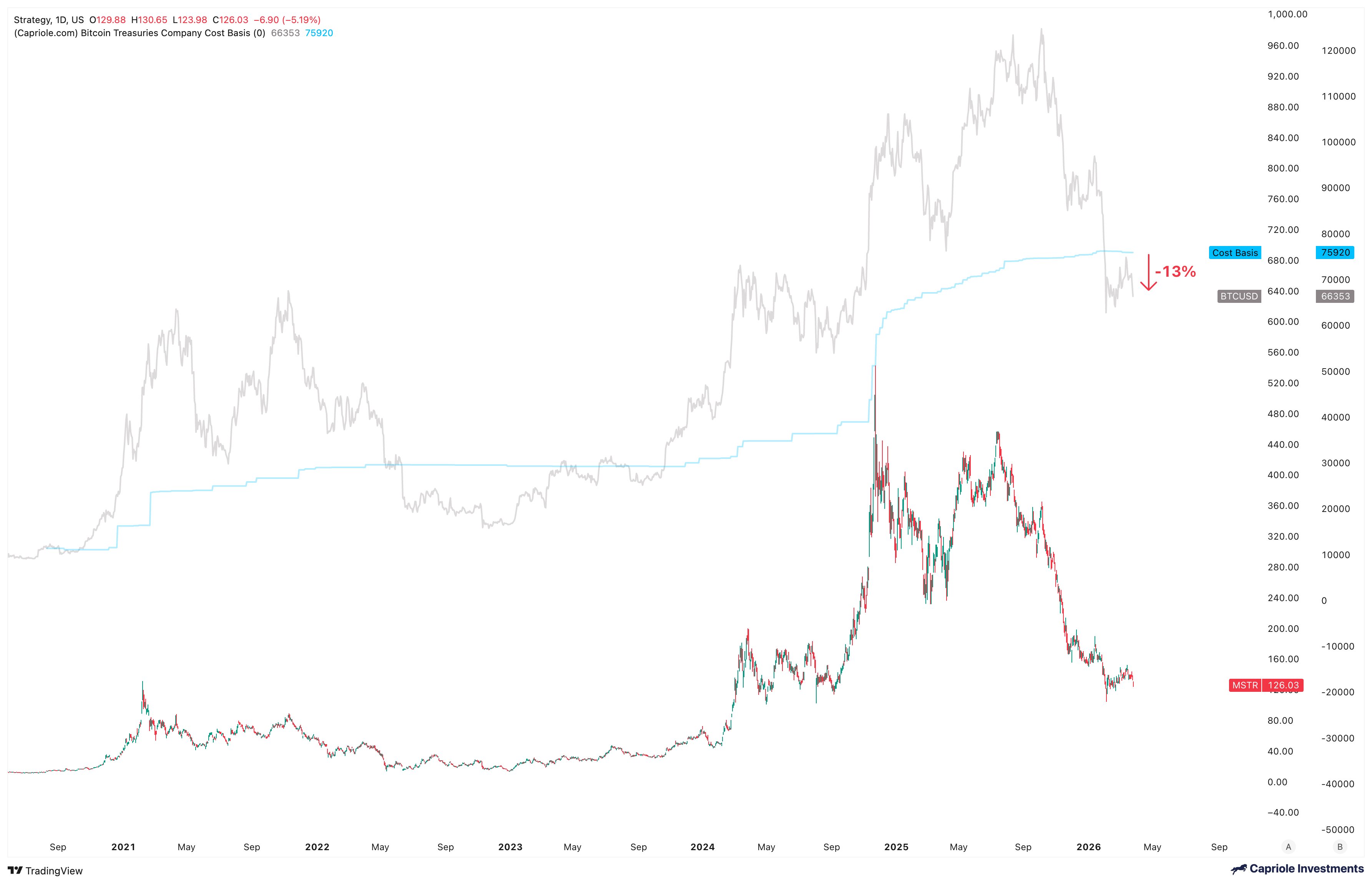
The core criticism from the skeptic centers on the use of locked-in leverage to acquire a highly volatile asset like Bitcoin. He argues that this approach does not work over the long term for such assets. He questions the logic directly: a company may hold 49 billion in $BTC, but what is the point if the process of acquiring it destroys $6.4 billion in shareholder equity?
In addition, Edwards continues to push the narrative of a quantum threat, arguing that without upgrading the protocol to a quantum-resistant state, long-term storage of billions in $BTC represents a latent risk.
At present, the market may interpret Edwards’ position as a warning signal. While he is often seen as alarmist, the failure of these strategies to demonstrate resilience at current price levels could trigger a wave of sell-offs among other public companies following the same model.

 thedefiant.io
 cryptonewsz.com
 cryptoticker.io