



 9
9
Bitcoin experienced a sharp decline, falling below $64,000, due to the unwinding of leveraged positions and volatility in global markets.
Thus, all the gains made during the rally that began after US President Donald Trump’s election victory were wiped out.
The price of $BTC fell by as much as 11% today, dropping to $63,719, its lowest level since October 2024. Bitcoin has lost almost half its value since its peak reached approximately four months ago. The sell-off was not limited to Bitcoin but also spread to altcoins, cryptocurrency ETFs, and companies like Strategy that hold large amounts of $BTC on their balance sheets.
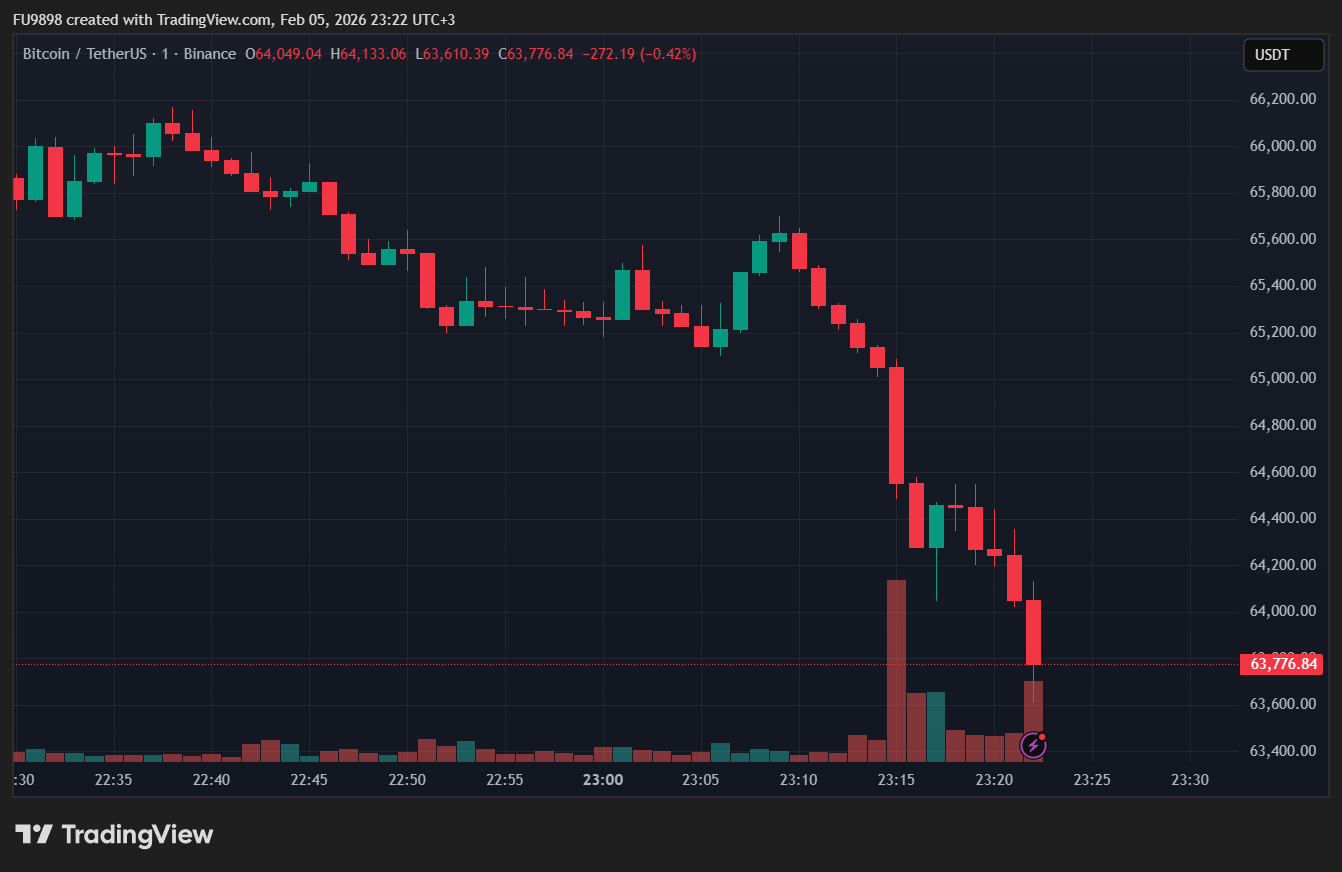
The decline in markets is driven by rising geopolitical tensions and decreased global risk appetite. The sell-off, which accelerated from mid-January, led funds to both close leveraged positions and sell assets to offset investor withdrawals. This triggered a self-reinforcing selling cycle.
Chris Newhouse, head of business development at Ergonia, stated that fear and uncertainty were evident in the market, and the lack of strong buyers further deepened the waves of ETF outflows and liquidations.
The current situation is reminiscent of the sharp pullback experienced in 2022 with the US Federal Reserve’s monetary tightening process. At that time, the end of the abundant liquidity environment during the pandemic led to a major correction in crypto assets.
Brokerage firms also came under pressure during this process. Coinbase shares have lost more than 30% of their value since the beginning of the year, while Gemini announced plans to reduce its workforce by up to 25% and downsize its operations in the United Kingdom, the European Union, and Australia.
The tens of billions of dollars inflows into US spot Bitcoin ETFs throughout 2025 had been a significant support factor for prices. However, this has reversed with the recent decline. According to Bloomberg data, approximately $2 billion has flowed out of Bitcoin ETFs in the last month alone. The total outflow over the last three months has exceeded $5 billion.
The sharp decline in the largest crypto asset has led to much heavier losses in smaller and less liquid tokens. A defensive positioning is also noticeable in the options market. While demand for protection below the $70,000 level is increasing, open positions concentrated around the $60,000 and even $20,000 levels in end-of-June futures contracts indicate a more pessimistic outlook.
Ryan Rasmussen, research director at Bitwise Asset Management, stated that cryptocurrency bear markets typically end in a “disinterest” phase, but currently the market is in a “despair” phase. According to Rasmussen, bearish momentum is dominating the market.
Marex senior strategist Ilan Solot stated that the selling pressure was linked to weakness in technology stocks, the relatively strong performance of gold, and a general risk-aversion trend. Solot argued that the short-term outlook remains weak, but historically, such sharp declines have presented opportunities for long-term investors.
*This is not investment advice.

 coindesk.com

 decrypt.co