


While most investors are nervously watching the U.S. Federal Reserve's tough stance and counting their losses in the stock market, big money has quietly begun flowing into cryptocurrency.
According to a new report from market maker Wintermute, those who believe they have already missed their entry point following Bitcoin's breakout risk missing the beginning of a new bull cycle entirely.
The current lull is not the end, but preparation for the next move, the company's analysts believe.
The past week should have been a disaster for crypto. The U.S. released unexpectedly strong labor market data. This is good for the economy but a blow to markets: the Federal Reserve is now expected to raise interest rates again, with the probability standing at 60%.
The reaction of traditional markets was predictable: gold fell, government bonds declined, and technology stocks ground to a halt. Bitcoin also panicked, but only for a few minutes. After plunging from $82,400 to below $80,000, it immediately recovered all its losses and closed the week up 3.45%.
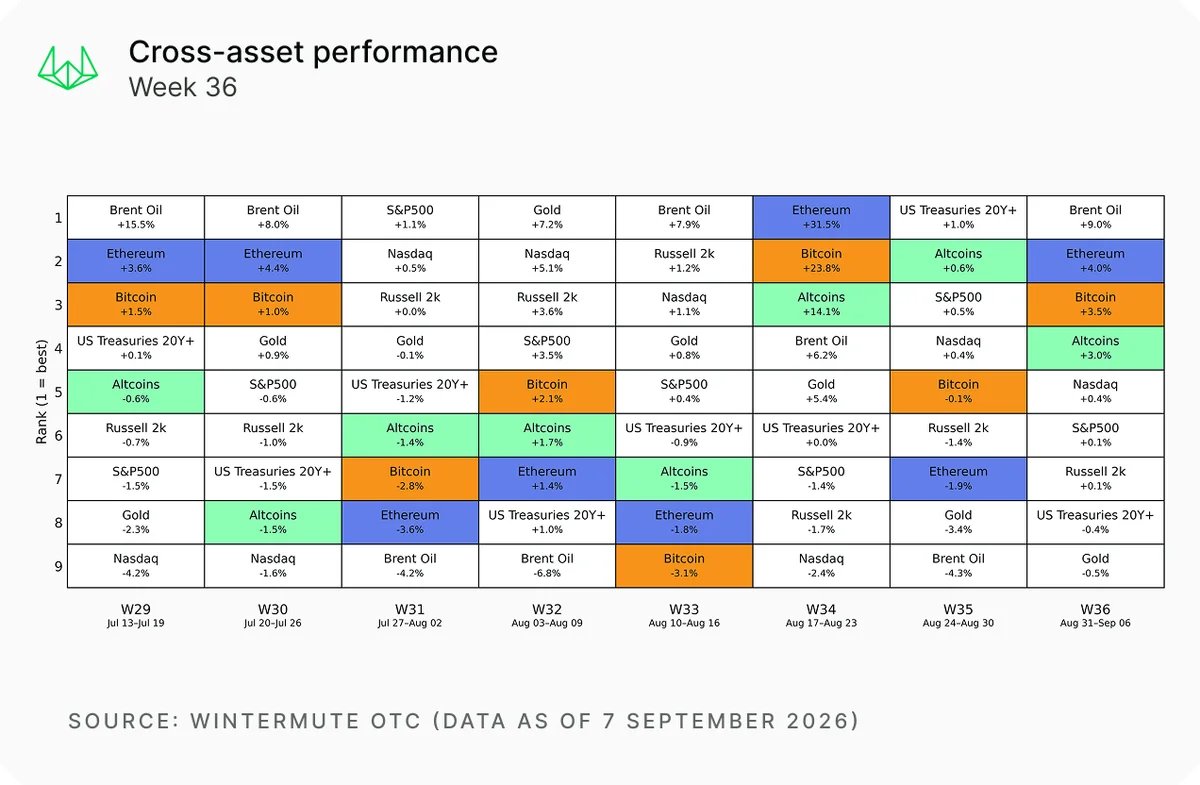
Wintermute explains this resilience simply: the stock market is becoming exhausted after the prolonged AI boom. Investors are taking profits there and moving the money into Bitcoin and Ethereum. According to the market maker, crypto is rising for the first time in a long while not alongside stocks, but because of their decline.
Why a 75% crash might not happen this time (Hint: Institutions and AI miners got there first)
The main argument from those afraid to buy now is: "We are too high. Let's wait for a crash." Wintermute's charts, however, suggest the opposite: this cycle is fundamentally different from previous ones.
Nearly 340 days have passed since the all-time high. During previous crises in 2018 and 2022, Bitcoin had already lost more than 75% of its value by this point and remained near the bottom for years. This time, however, the maximum drawdown was only around 50%.
Wintermute emphasizes that the bottom of each new cycle is becoming increasingly shallow.
The reason is institutional investors. Major funds no longer wait for Bitcoin to fall to an arbitrary level such as $20,000. Instead, they begin aggressively buying much earlier through spot ETFs. Nearly $1 billion has flowed into these funds over the past three weeks, while last Thursday recorded the largest inflows since January.
According to the report, the market has entered a "young cycle" stage, when capital gradually moves from the largest cryptocurrencies into riskier assets. Bitcoin and Ether provided the initial momentum, and investors are now turning their attention to altcoins. UNI and ARB surged almost 40% over the week, while activity is beginning to pick up in the artificial intelligence sector, including TAO and RENDER, ahead of important events in December.
Two scenarios: Where is the point of no return?
The market maker reduces the next stage of the market to two clear levels:
- $82,000 — if Bitcoin confidently breaks above this level, funds sitting in cash will begin to panic as FOMO takes hold. They will be forced to jump aboard the departing train, pushing the price even higher.
- $72,000 — this is the critical scenario-invalidation zone. If Bitcoin falls below it and spot ETFs begin recording heavy outflows, the bullish trend will be put on hold, the analysts warn.
The month's main test will come on September 11, when the U.S. releases new inflation data through the Consumer Price Index. According to Wintermute, this report will determine whether smart money continues flowing from stocks into crypto or whether the markets are hit by a wave of widespread selling.

 thecryptobasic.com

 invezz.com
 ambcrypto.com