



 4
4
Crypto markets may be entering a stabilization phase as improving sentiment and stronger on-chain signals support a possible near-term bottom, according to Coinbase Institutional and Glassnode research. Although geopolitical tensions and macro uncertainty continue to shape risk appetite, analysts say several indicators now point to conditions that could support recovery later in the second quarter.
Total crypto market capitalization excluding stablecoins dropped 18% during the first quarter of 2026, reflecting pressure across digital assets. However, stablecoin supply rose from $308 billion to $318 billion during the same period. That increase suggests capital did not fully exit crypto markets. Instead, some investors appear to be waiting on the sidelines for stronger confirmation before redeploying funds.
Bitcoin’s investor sentiment has also improved. Glassnode data shows Bitcoin’s Net Unrealized Profit and Loss metric moved from a fear phase into optimism.
At the same time, 75% of institutional investors and 71% of non-institutional investors consider Bitcoin undervalued. That shift strengthens the argument that downside risks may be becoming more limited.
On-Chain Data Points to Accumulation
Several blockchain signals support a more constructive market structure. Bitcoin supply moved within the past three months dropped 37% in the first quarter. Meanwhile, supply held for over one year increased by 1%. That trend often reflects reduced speculative activity and stronger conviction among long-term holders.
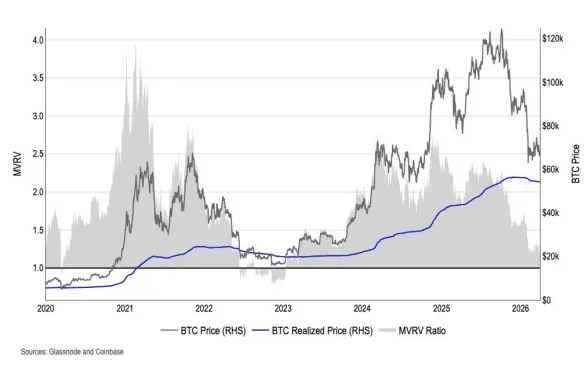
Additionally, Bitcoin’s profitability metrics now place the asset in an accumulation zone. The MVRV framework and supply-in-profit data suggest valuations sit near historically favorable levels. The Puell Multiple also fell to 0.7, signaling miner revenues remain below long-term norms, a condition often associated with market bottoms.
Ethereum Sees Long-Term Holders Strengthen Position
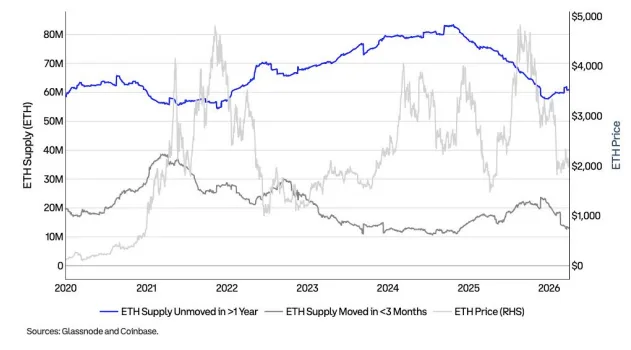
Besides Bitcoin, Ethereum also showed structural improvement despite underperformance. Supply held for less than three months declined 38% in the first quarter, while long-term supply rose 1%. That shift suggests weaker hands exited the market while patient investors increased holdings.
Besides that, Ethereum’s NUPL moved near the transition from Capitulation toward Hope, indicating sentiment may be stabilizing after heavy selling pressure. Analysts also pointed to growing asset differentiation as a major theme, arguing Ethereum’s future cycles may depend more on utility and adoption than broad speculative flows.
Consequently, investors are increasingly focused on whether Ethereum can benefit from improving regulatory clarity and long-term network demand as market conditions normalize.
Macro Risks Still Shape Market Direction
Despite stronger technical signals, macro conditions remain the dominant driver. Bitcoin’s correlation with the S&P 500 climbed to 0.58, reinforcing its growing sensitivity to broader risk markets. At the same time, uncertainty tied to Middle East tensions and oil disruptions continues to cloud growth expectations.
The IMF now projects global GDP growth at 3.1% for 2026, down from 3.4%. However, some private forecasts warn growth could slow to 1.4% if energy shocks worsen. That risk continues to limit aggressive positioning.
Moreover, analysts highlighted two internal crypto themes worth monitoring, progress on the CLARITY Act and development in post-quantum cryptography protections. Both could influence market structure over the medium term.


 invezz.com