


 2
2
Geopolitical tension between the U.S. and Iran raised volatility, pushing traders to reduce risk. Notably, capital rotated into stablecoins as a defensive move. Binance flows reflected this behavior, shifting from $7.6 billion in outflows to nearly $6 billion in inflows as of writing.
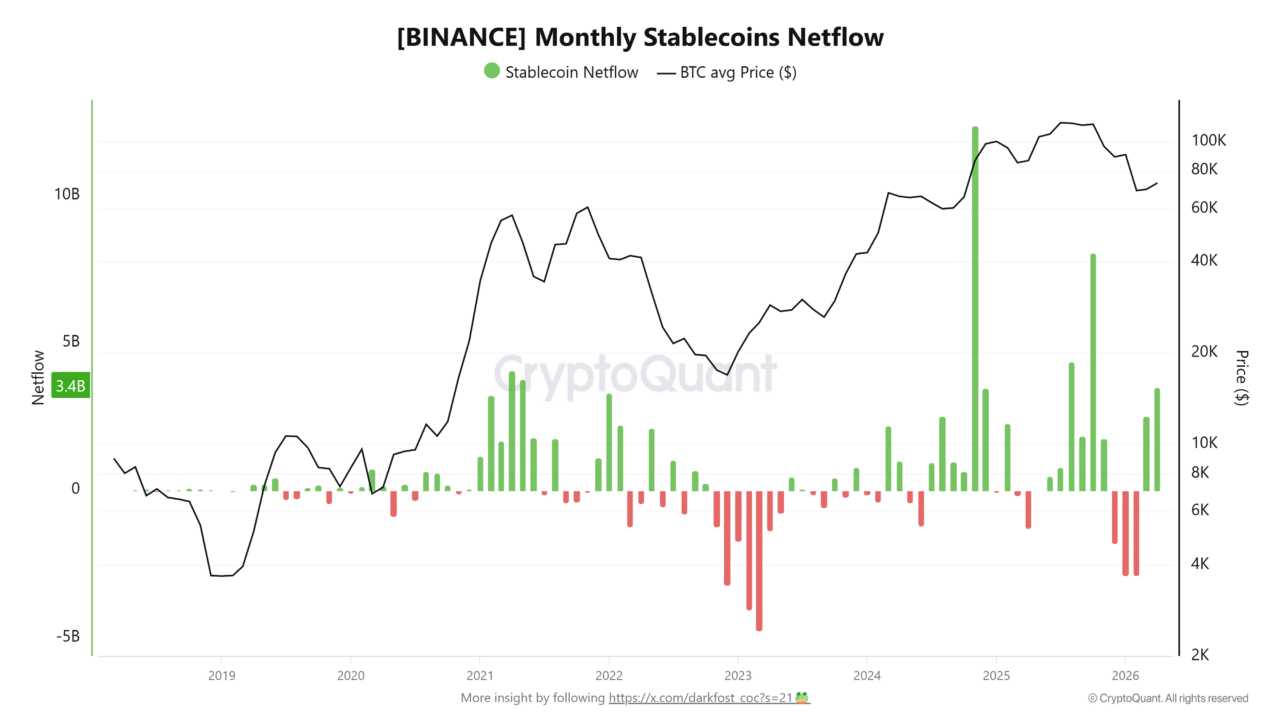
April alone added about $3.4 billion, showing capital returning with caution. This shift developed as Bitcoin [$BTC] approached the $90k–$100k range, where uncertainty limited aggressive positioning.
The Exchange Supply Ratio stayed above 0.30, signaling large idle liquidity. This shows traders prepare for direction, not immediate action. If confidence builds, deployment can drive upside, while hesitation may extend consolidation despite improving sentiment and structural support.
Falling SSR signals sidelined liquidity
At the time of writing, the Stablecoin Supply Ratio (SSR) dropped from around 19 to near 11, signaling an increase in sidelined buying power. This shift occurs because stablecoin growth outpaces Bitcoin’s market value, increasing theoretical capacity.
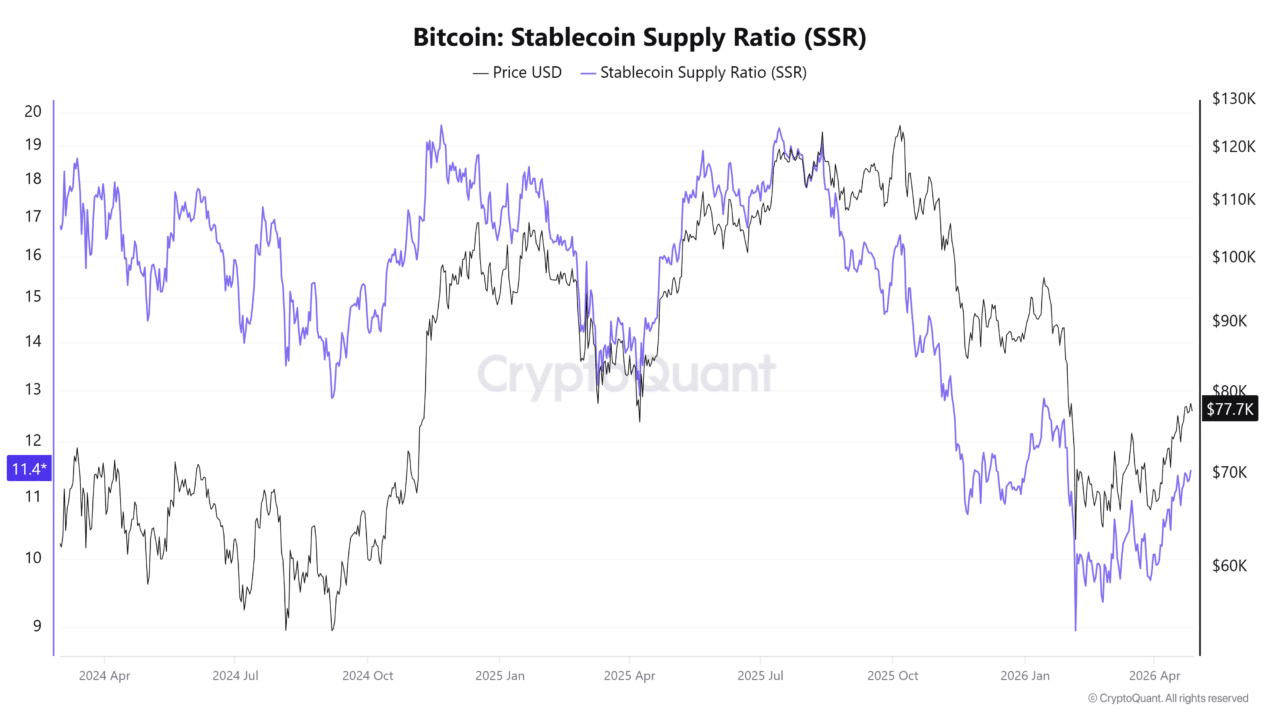
However, prices did not follow suit, with Bitcoin peaking near $120k, then falling to $60k-$70k before stabilizing near $77. This disconnect demonstrates capital entering but avoiding risk deployment, reflecting uncertainty and defensive positioning.
Meanwhile, weak Spot Taker CVD confirms buyers’ lack of conviction, while sellers maintain momentum. If confidence improves, this liquidity can drive upward expansion, whereas continued hesitancy may prolong consolidation, leaving markets supported by liquidity but lacking strong directional follow-through for now.
Asia-led stablecoin usage highlights…
As sidelined liquidity builds, its real-world usage begins to diverge across regions, revealing how capital actually moves.
As markets prioritize faster settlement and dollar access, Asia accounts for roughly 63% of stablecoin payments, totaling around $245 billion annually. Demand is strong in Singapore, Hong Kong, and Japan, where they reduce payment friction rather than fuel speculation.
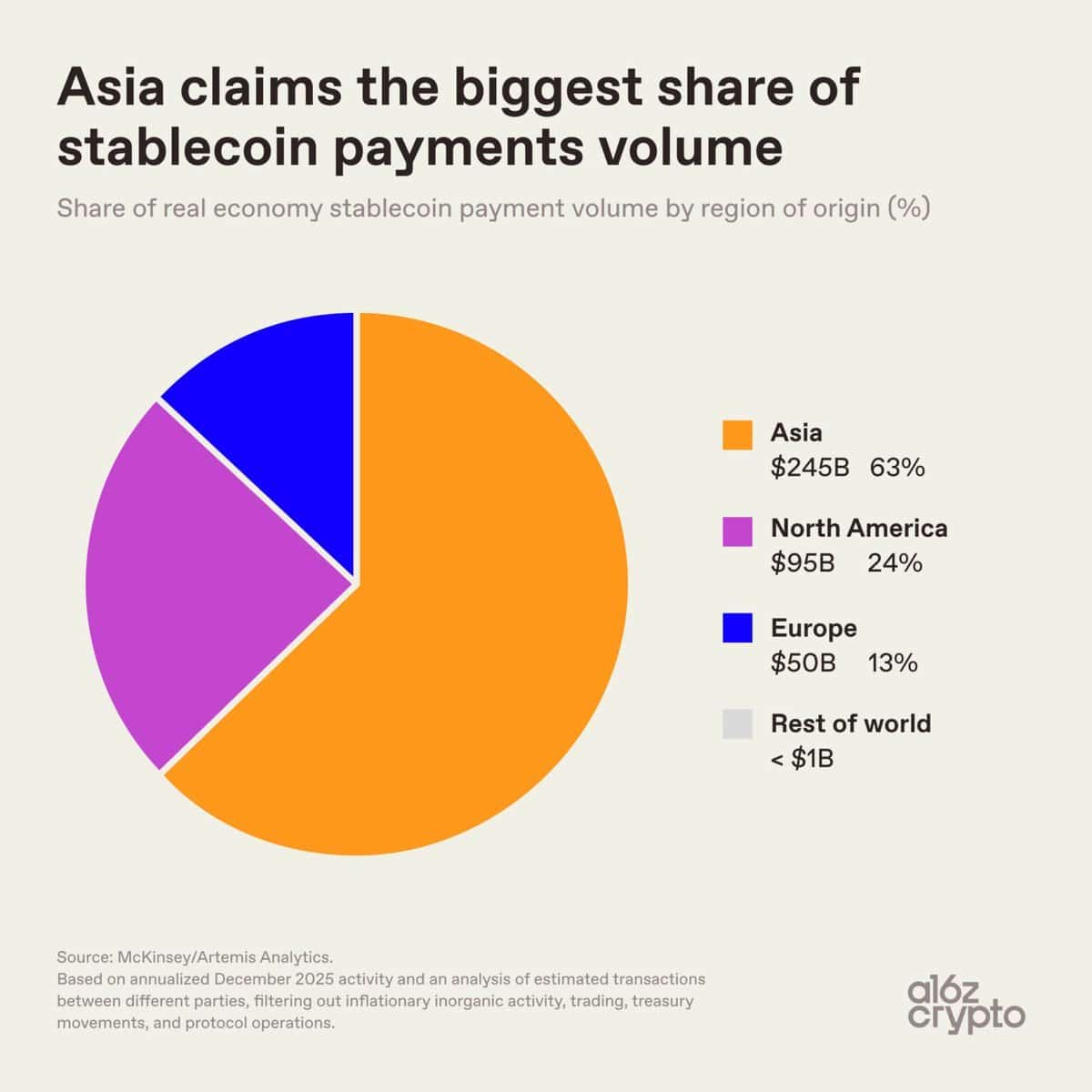
North America follows with $95 billion, while Europe contributes $50 billion, highlighting the regional disparity. However, this strong utility does not flow into spot demand, which explains muted price reactions. If payment activity feeds trading flows, momentum can expand, while continued separation keeps markets liquid yet structurally range-bound for now.
All this together, stablecoin liquidity on Binance is no longer the constraint, as the market now depends on whether this capital shifts into active demand or remains parked amid uncertainty.
Final Summary
- Stablecoins now anchor market structure, where rising reserves signal readiness, yet weak deployment keeps Bitcoin [$BTC] price action capped.
- Stablecoins drive global liquidity growth, but without rotation into Bitcoin and Ethereum, markets remain range-bound despite strong underlying demand.

 crypto.news
 cryptonewsz.com

 u.today