


 4
4
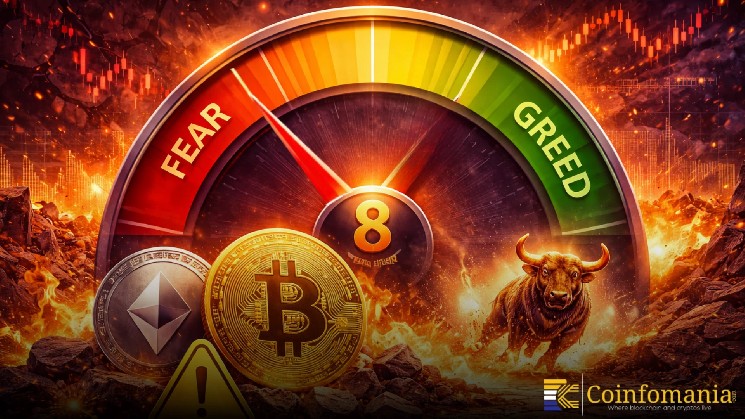
The recent drop in the Crypto Fear and Greed Index highlights continued weakness in market sentiment across the digital asset space. A reading of 8 places the market firmly in the “extreme fear” category, signaling that investors are highly cautious and increasingly risk-averse. The index, which is calculated using factors such as volatility, trading volume, market momentum, and social sentiment, reflects a combination of negative signals currently dominating the market environment.
🚨 Crypto Fear and Greed Index drops to 8, the LOWEST in 2 weeks.
— $BNB Swap (@BNBSwap) March 23, 2026
Crypto sentiment has now sat in Extreme Fear or Fear territory for 65 straight days. pic.twitter.com/2PXnpNEwrm
Extended Period of Fear Reflects Weak Market Confidence
This situation marks a prolonged phase of uncertainty. For 65 consecutive days, the crypto fear market has remained within fear or extreme fear territory, indicating sustained pressure rather than a short-term reaction. During such periods, investors often reduce exposure, delay new investments, and shift toward safer assets. This behavior can contribute to lower liquidity and continued downward pressure on prices.
Major cryptocurrencies like Bitcoin have also shown fluctuations during this time, mirroring the broader sentiment. External influences such as macroeconomic uncertainty, inflation concerns, and geopolitical developments continue to weigh on investor confidence. As a result, the market remains sensitive to both internal and external triggers.
Crypto Fear and Greed Patterns
Although extreme fear reflects negative sentiment, historical data suggests it can also signal potential turning points in the market cycle. In previous instances, very low readings on the Crypto Fear and Greed Index have often appeared near market bottoms. These phases are typically characterized by reduced selling pressure and gradual stabilization.
As fear becomes widespread, markets may enter oversold conditions. At this stage, even minor positive developments—such as improved economic data or renewed institutional interest—can shift sentiment. Some investors adopt a contrarian approach during these periods, choosing to accumulate assets while prices remain suppressed.
Potential Market Implications
Analysts emphasize that such signals should not be viewed in isolation. Market recoveries of crypto fear depend on a combination of factors, including liquidity conditions, regulatory developments, and broader financial trends. While sentiment indicators provide useful context, they do not guarantee immediate reversals.
The current environment represents a delicate balance between caution and opportunity. While prolonged fear highlights weak confidence, it may also indicate that the market is approaching a phase of transition. Investors are now closely watching for signs of stabilization, which could determine whether the market begins to recover or remains under pressure in the near term.

 cryptobriefing.com
 2
2

 beincrypto.com
