



 3
3
U.S. stocks pulled back Thursday as investors digested blockbuster artificial intelligence (AI) earnings, rising oil prices and fresh tariff pressures, leaving Wall Street in a cautious mood after a two-day rally.
Markets Retreat Despite Strong Earnings, Oil Climbs on Iran Talks
As of about 12:40 p.m. EST on Feb. 26, U.S. equities were firmly in retreat. The S&P 500 slipped 0.9% to roughly 6,883, the Nasdaq Composite fell 1.6% to around 22,782 and the Dow Jones Industrial Average declined 0.3%, or about 162 points, to near 49,320.
The downturn erased part of Wednesday’s rally, when all three major benchmarks climbed on renewed optimism surrounding artificial intelligence and corporate earnings. That enthusiasm met a dose of skepticism by Thursday morning.
Several reports and terminals show technology stocks led the slide. The Information Technology sector dropped more than 2%, as traders reassessed whether eye-popping AI profits can justify equally eye-popping capital expenditures. Markets appear to be shifting from celebration mode to interrogation mode.
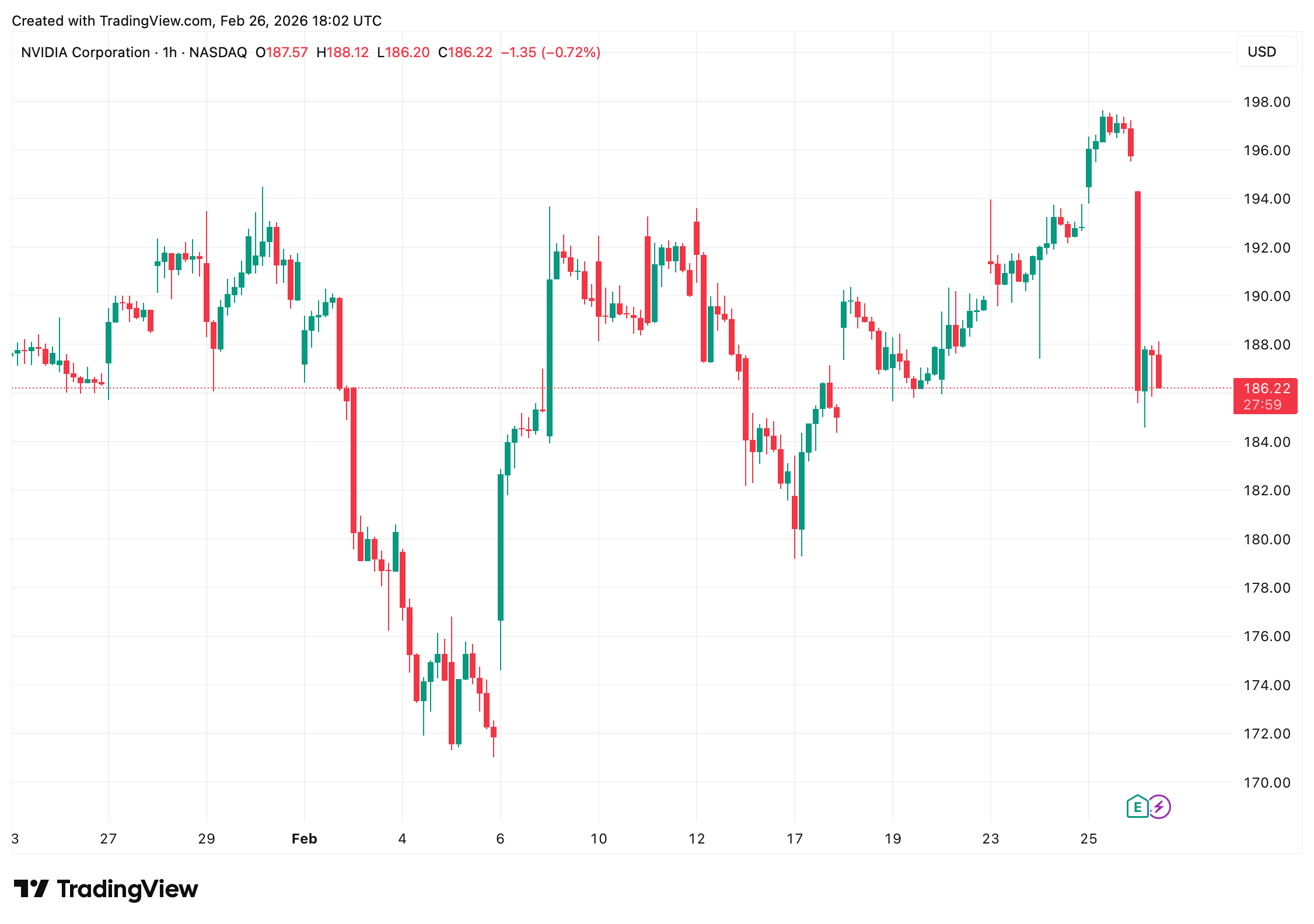
At the center of the action was Nvidia, which reported a 94% jump in quarterly profit and revenue above expectations. Instead of triggering another rally, its shares fell nearly 5%. Investors seemed less impressed by what the chip giant earned and more focused on how sustainable the AI buildout will be amid intensifying competition.
The ripple effects were swift. The Nasdaq 100 slid 1.6%, and software names felt added pressure after Salesforce issued softer-than-expected 2027 revenue guidance. That tempered optimism about enterprise artificial intelligence (AI) adoption and raised questions about how quickly big spending translates into durable profit growth.
Not all chipmakers suffered. Broadcom rose nearly 5.8% after unveiling a new AI chip rollout, while AMD gained about 4.2% on partnership news. The divergence suggested that investors are becoming more selective, rewarding perceived execution while punishing ambiguity.
Outside tech, energy stocks eked out gains. Brent crude climbed to $72 amid intense U.S.-Iran nuclear negotiations, lifting the Energy sector by roughly 0.5%. Higher oil prices can bolster energy profits but also rekindle inflation concerns — a dynamic that keeps traders glancing nervously at bond yields.
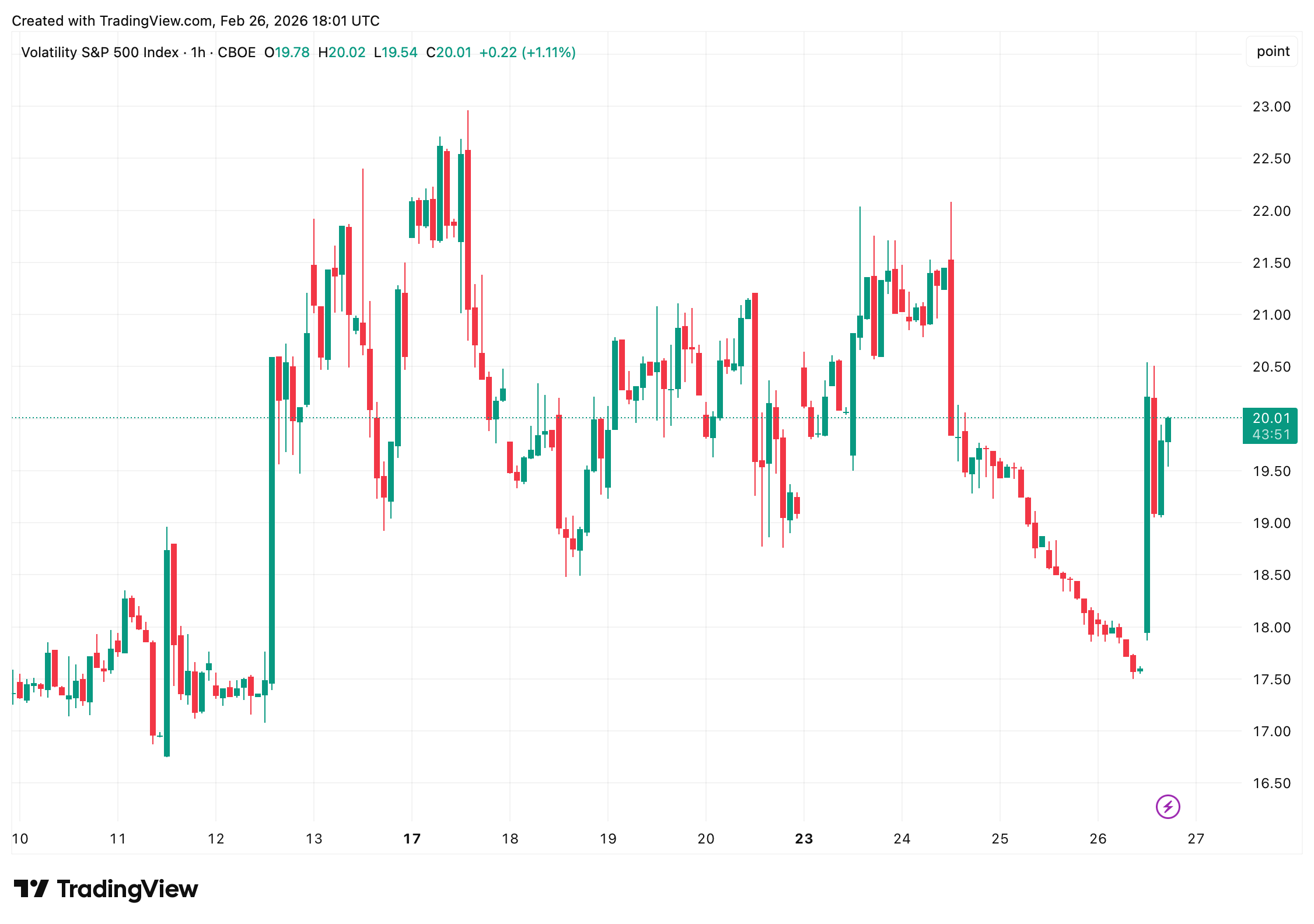
Treasury yields moved lower, with the 10-year yield dipping to about 4.031%, reflecting a modest flight to safety. Gold slipped 0.84% to $5,182.40, while the U.S. Dollar Index ticked slightly higher. Meanwhile, the Cboe Volatility Index, or VIX, jumped 10.65% to 19.84, signaling elevated anxiety in the options market.
Economic data offered little drama but some reassurance. Initial jobless claims rose slightly to 212,000 from 208,000 the prior week, indicating a stable labor market. Unemployment remains near 4%, and forecasts still call for U.S. GDP growth of about 2.4% in 2026. That backdrop may limit the downside, even as investors navigate policy and earnings crosscurrents.
Trade policy added another layer of complexity. Trump’s newly conceived global tariffs have prompted companies to rethink supply chains and pricing strategies. Small-cap stocks, tracked by the Russell 2000, fell about 0.5%, reflecting their sensitivity to domestic economic and trade conditions.
The crypto economy is down more than 3% on Thursday, falling in line with U.S. equities. While bitcoin gained headway near the $70,000 range on Wednesday, today’s sessions have seen it drop below $67,000. Ethereum, too, has slipped again and is back under the $2,000 range at $1,985 per coin.
For the rest of the week, analysts describe the outlook as cautiously constructive. Rotation into financials and large-cap stocks may continue, particularly if economic data hold firm. At the same time, technology names could find support if confidence in AI’s long-term revenue potential stabilizes. However, there’s a great deal of fear over AI’s disruption and some more conservative views as well.
Wall Street consensus still envisions the S&P 500 advancing toward 7,650 by the end of 2026, implying gains of roughly 10% from current levels. But between tariff negotiations, geopolitical talks and relentless scrutiny of AI spending, the path forward may resemble a winding road rather than a straight line.
FAQ 🔎
- Why are U.S. stocks down today?Tech weakness, post-earnings reactions and tariff concerns are weighing on major indices.
- How did Nvidia’s earnings impact the market?Despite strong profit growth, Nvidia shares fell as investors questioned the sustainability of AI spending.
- What sectors are performing better?Energy stocks are gaining on higher oil prices tied to U.S.-Iran negotiations.
- What is the short-term outlook for markets?Analysts expect continued volatility with potential rotation into financials and selective opportunities in tech.

 beincrypto.com
 coinpaper.com