



 7
7
Due to ongoing selling pressure, Shiba Inu is still struggling as the overall cryptocurrency market is still weak. The long-term downward trend is evident in the price action, which has repeatedly failed to regain important moving averages and resistance levels. Every attempt at recovery has been thwarted by fresh supply, which has caused $SHIB to return to its most recent lows.
Shiba Inu at key threshold
The exchange reserve level, which is getting close to the 82 trillion $SHIB threshold, is a critical indicator that is currently receiving attention. Increasing exchange reserves has historically indicated that more tokens are being transferred to exchanges, usually in anticipation of sales.
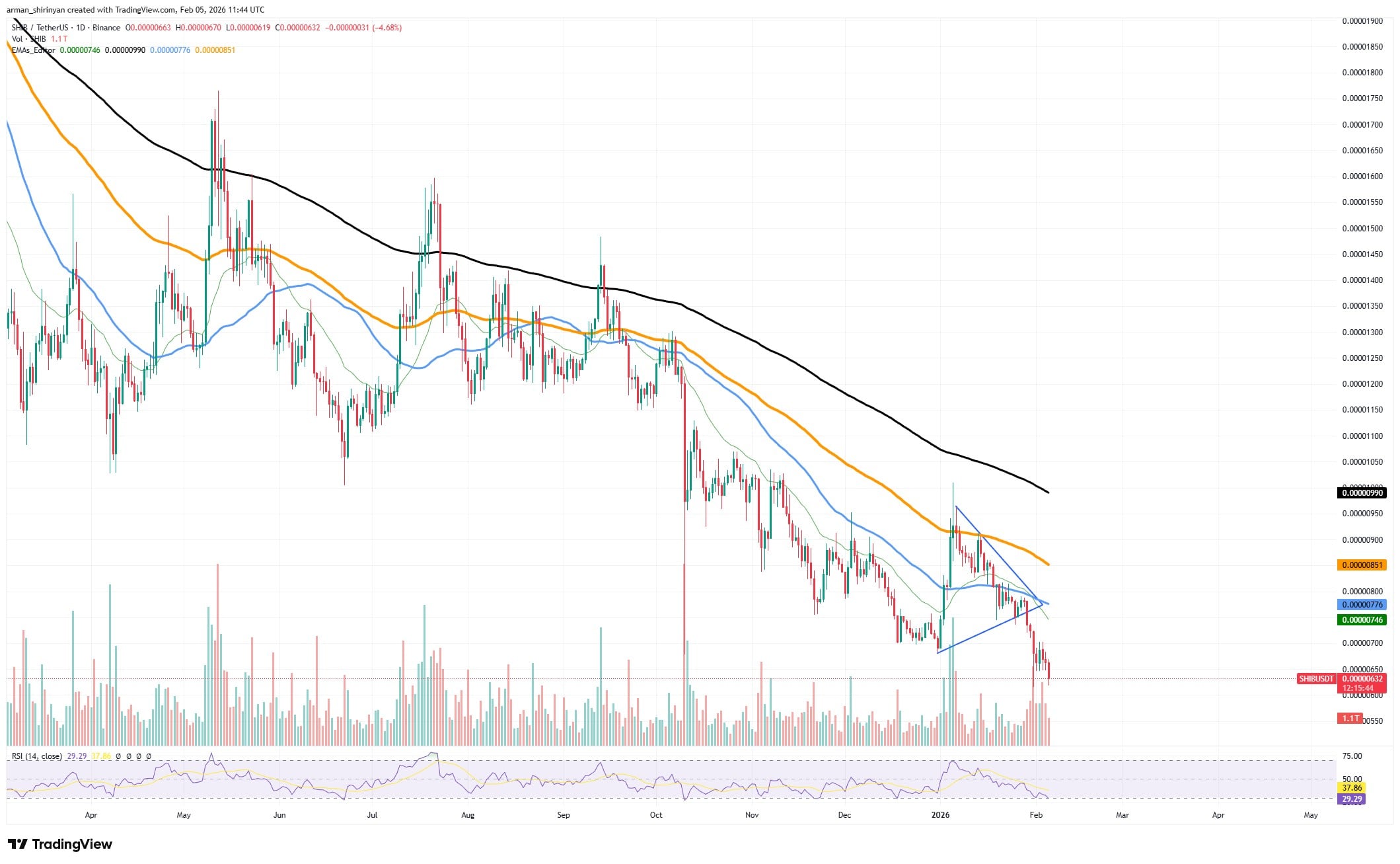
A substantial supply overhang is developing on the market. When reserves get close to or surpass this range, a structural issue for price recovery is brought about by this circumstance. Large volumes of tokens sitting on exchanges allow sellers to quickly offload positions, capping rallies and igniting new declines even if demand temporarily increases.
The outlook is supported by recent exchange flow data. Both large holders and retail participants may be actively positioning tokens for possible liquidation, as indicated by rising inflows and elevated mean transaction sizes. When combined with $SHIB's failure to recover important resistance levels, this suggests that price performance will remain vulnerable. Investors should be cautious about their expectations.
Exchange reserves decline
A significant decline in exchange reserves that indicates accumulation rather than distribution would be necessary for a sustainable recovery, in addition to a technical improvement on the chart. Rallies will probably continue to be brief until that change takes place. In the event that selling pressure persists and reserves firmly surpass 82 trillion, $SHIB may experience another decline as supply surpasses demand.
As of right now, market conditions point to attempts at stabilization rather than a confirmed reversal, which means that the near-term outlook is still dominated by downside risk.

 coinpaper.com

 thecryptobasic.com
 invezz.com