


 9
9
Davos 2026 proved to be an indicator of the looming threat that cryptocurrency poses to the traditional banking infrastructure that made JP Morgan CEO Jamie Dimon famously call Bitcoin (BTCUSD) a “fraud” in 2017 and spent years comparing it to pet rocks, suggesting that its primary purpose is to serve scammers and money launderers (Yahoo Finance).
He is on the contrary building from a different tune. Early in November, JPMorgan became the first bank to issue a U.S. dollar deposit token on a public blockchain. Dimon started by admitting he was wrong on Bitcoin… or at least that the “blockchain is real.” JPMorgan has been building out its own blockchain over the last several years, focusing on serving its institutional clients in ways that typically don’t warrant much mainstream attention. And while its latest move still caters to elite, institutional clients, it sets the stage for huge things to come across the crypto universe (Yahoo Finance).
Dimon’s latest exchange during a chance encounter over coffee with former U.K. prime minister Tony Blair, JPMorgan Chase CEO Jamie Dimon abruptly cut in, pointing a finger and telling Brian Armstrong (CEO of Coinbase) bluntly, “You are full of s—,” according to reporting from The Wall Street Journal. Based on his past actions, this may signal cryptocurrency and exchanges are here to stay and the banks have some catching up to do amidst growing tensions.
The Anti-Dollar Argument and Growing Need for An Alternative
“The anti-dollar trade reflects a global search for policy certainty.”- Nigel Green
The dollar’s supremacy is cracking, and markets are building an escape route, warns Nigel Green of deVere Group. He concludes: “The dollar will remain central to global finance, but its supremacy has been cracking in recent years, and this has been accelerated in recent days, with markets now seemingly building an escape route. The current episode could mark a structural turning point. “A multipolar currency world is becoming more plausible. Investors already treat the euro, yen, and select emerging market currencies as partial hedges against US policy risk. Digital assets also enter strategic discussions at the margin.”
The chief executive points to the scale and frequency of fiscal confrontations in Washington as a structural issue for the currency. He argues that shutdown threats undermine the perception of US assets as the global benchmark for safety. Political challenges such as the current partial shut down puts more than $1.2 trillion in federal spending at risk and threatens funding for major departments including Defense, Treasury, State, and Health and Human Services.
“Repeated shutdown brinkmanship erodes confidence in US governance, and markets are likely to be starting to price political dysfunction into the dollar,” says Nigel Green. “The dollar’s dominance rests on institutional stability, fiscal credibility, and policy predictability. Shutdown risks weaken all three pillars."
He links shutdown brinkmanship with broader diversification trends among global reserve managers. Central banks have been reducing dollar reserves in favour of gold and other currencies for years. Political shocks accelerate that process by reinforcing the perception of US political risk. “Global investors hedge dollar exposure during fiscal confrontations. He argues that the current environment encourages capital to seek alternatives.
A Demand for Trust and Stability
“Currency leadership rests on credibility, and credibility erodes when governance looks unstable.” The dollar remains dominant and the world’s primary reserve currency, yet vulnerability is increasing. “If shutdown brinkmanship becomes even more routine, investors will continue to diversify away from the dollar, and reversing that shift will be difficult”- Nigel Green.
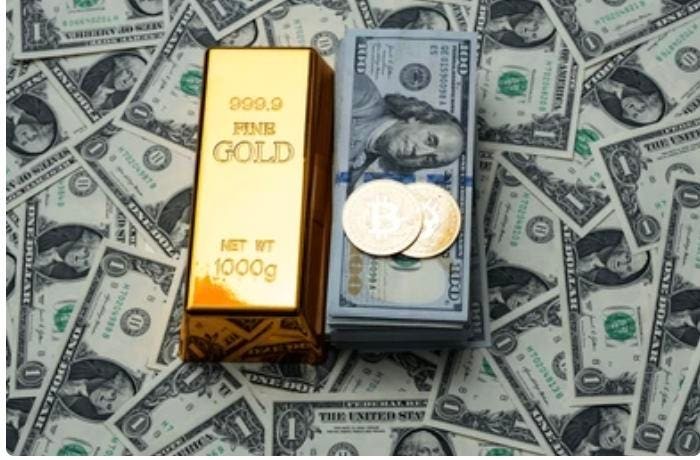
The decentralized nature of bitcoin may prove appealing in a world of declining U.S. dollar dominance and a changing global trade order. The U.S. dollar has been the global reserve currency since the end of World War II. Weakening of the dollar’s value due to significant declining confidence in the U.S. (sentiment) or ballooning U.S. deficit (fundamentals) could be a watershed moment for currencies.
“The U.S. has benefited from the dollar serving as the world’s reserve currency for decades. But that’s not guaranteed to last forever,” BlackRock CEO Larry Fink said in his 2025 annual letter to investors. “If the U.S. doesn’t get its debt under control, if deficits keep ballooning, America risks losing that position to digital assets like Bitcoin.”
According to ETFTrends, a retreat from U.S. exposures and the dollar by foreign investors and entities would give space for the rise of other currencies, including bitcoin. While much remains in flux and is uncertain for now, it’s a trend to follow in the months and years to come, especially as it relates to how banks will adapt to the plausible exchange in currency shifts.

 u.today

 crypto.news
 beincrypto.com
 1
1

