


 8
8
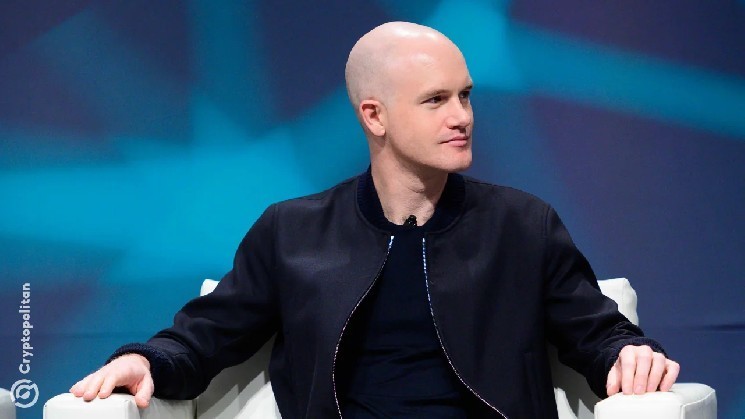
Brian Armstrong, CEO of Coinbase, outlined his vision, arguing that cryptocurrency is set to evolve from a niche speculative asset into a core part of modern finance, to the point that even its harshest critics may end up using it daily without realizing it.
Sources familiar with the matter, speaking anonymously, said this shift relies on the quiet integration of blockchain into everyday digital activities like payments and identity verification.
Therefore, the situation suggests the possibility of this conversation shifting from the phrase “if ” people will utilize cryptocurrency to “how ” they will interact with this hidden framework.
Armstrong emphasizes the role of hidden infrastructure in the crypto industry
Reports from reliable sources stressed that Armstrong’s forecast moves from wishful thinking to strategic execution. To break this point down for better understanding, these sources noted that the industry executive’s vision represents a significant idea within the crypto industry, emphasizing that technology plays a crucial role in individuals’ daily lives.
Nonetheless, analysts conducted research and discovered that major innovations previously shifted swiftly from cutting-edge to invisible infrastructure. For instance, several internet users today rarely consider TCP/IP protocols when sending emails.
Similarly, Armstrong expressed his strong belief that blockchain and cryptocurrency systems will transform into the hidden infrastructure for transferring digital assets.
Notably, this shift from a visible, sometimes unpredictable asset class to a daily essential tool serves as the cornerstone of his argument. Hence, reports suggested that critics who focus primarily on price movements could overlook the significant shift toward the practical use of crypto.
Meanwhile, it is worth noting that experts often compare this situation to past industrial and technological transformations. Dr. Aisha Chen, a fintech historian at Stanford University, decided to comment on the matter. In a paper from 2024, Chen stated that, “We don’t say we’re ‘using HTTP’ when we browse the web”, further arguing that, “The user experience hides all the complicated details.” With this argument in mind, she suggested that blockchain development could adopt a similar approach.
Responding to Chen’s claim, crypto analysts noted that crucial initiatives aim to improve scalability and user experience to the point where the blockchain is downgraded from a core dependency to an optional feature.
Armstrong views technology advancements as a game-changer in the crypto world
The crypto industry recently encountered several developments. Interestingly, these developments back Armstrong’s vision. To support this claim, sources noted that transparent regulations in key areas, such as the European Union’s MiCA framework and emerging US guidelines, create a conducive environment for developers.
Another example outlined was the advancements in layer-2 scaling solutions and zero-knowledge proofs, which are time-efficient and substantially reduce transaction expenses, hence facilitating micro-transactions.
Moreover, several institutions have demonstrated heightened interest in embracing these technologies, particularly for settling payments and tokenizing assets. This enables them to establish a solid foundation designed with user-friendly interfaces.
Following this finding, Armstrong alleged that critics focus on challenges in the crypto ecosystem, such as price swings, the complexity of the technology, energy consumption, and illegal activities. However, he asserted that as technology continues to advance, it actively addresses these issues, arguing that proof-of-stake networks have addressed several environmental problems associated with energy consumption.

 newsbtc.com
 cryptoslate.com
 en.bitcoinsistemi.com