


 1
1
A memecoin presale is often built around promises: a team says there will be fair access, no hidden supply, and liquidity after launch. Buyers may have little way to check those promises before they send funds.
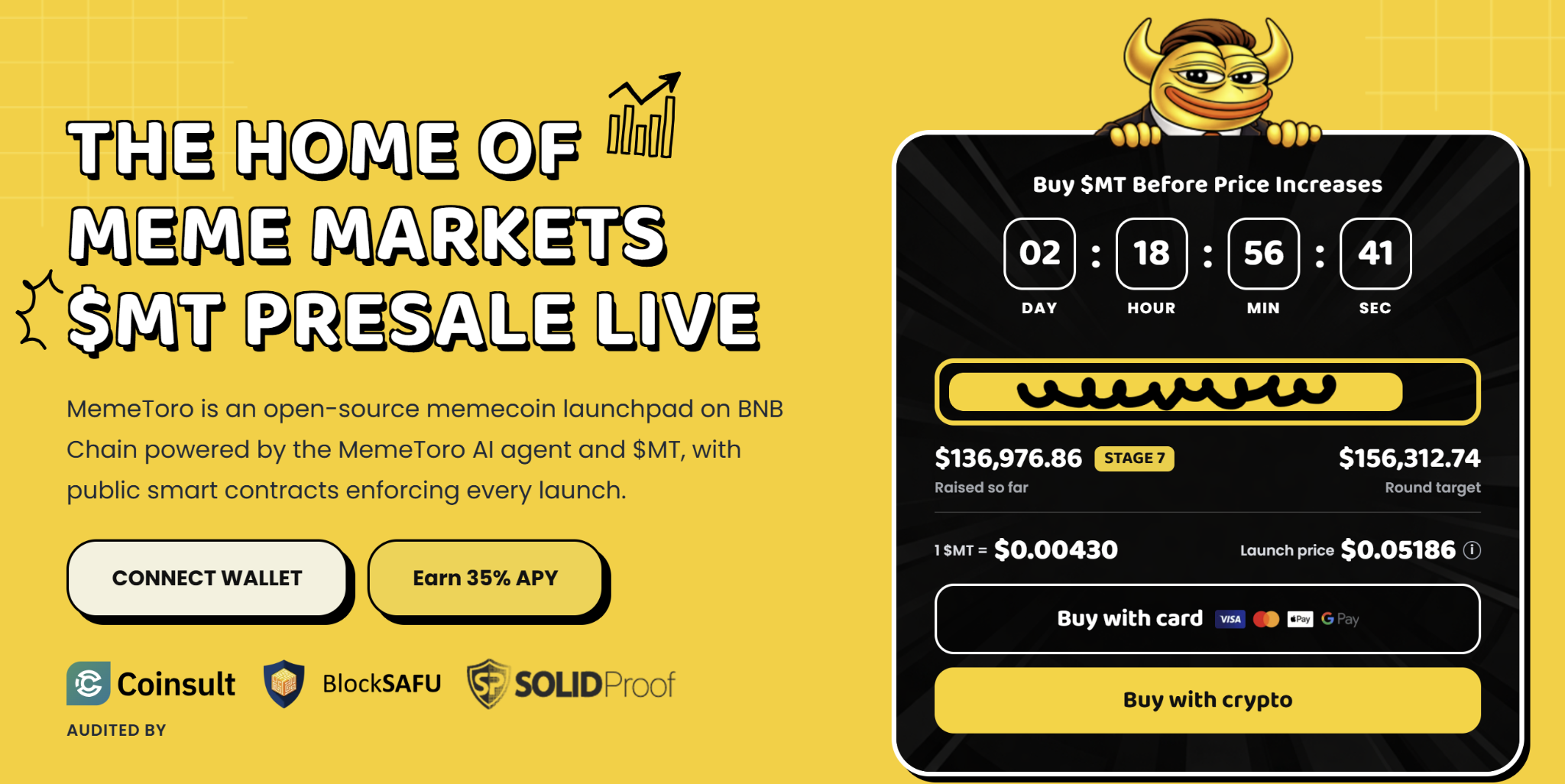
MemeToro is taking a more open approach. It has published 1,373 lines of Solidity code across 17 files under an MIT license, including its first FairLaunchEscrow.sol contract. The project has raised more than $137,000 in Stage 7, with $MT priced at $0.00430.
The new code does not mean the full launchpad is live, but it gives buyers a public view of how MemeToro plans to handle funding, refunds, allocations, and liquidity.
Inside MemeToro’s AI Launchpad Model
MemeToro is a planned $BNB Chain ecosystem designed to make memecoin launches easier to understand and verify. Its AI agent is intended to study market, news, and social signals before proposing a token concept.
The agent then prepares a public launch manifest. This document is meant to show the evidence, proposed token supply, fixed funding price, cap, and rules for the round.
The project’s validator is designed to reject a proposal if the evidence does not match the source links, if allocations fail to equal 100%, if an insider allocation is above zero, or if funding terms conflict with the manifest.
$MT is intended to support the wider platform. Planned uses include access, launch funding, staking, rewards, memecoin trading, prediction markets, and a news portal.
The AI is not meant to control money by itself. It handles research and documentation, while the smart contract is meant to enforce the accepted launch rules.
The MIT License Makes The Code Easier To Review
An MIT license is a simple open-source software license. It allows developers to inspect, reuse, and build on the code under clear conditions.
For a new crypto memecoin presale, this gives the community a chance to look beyond a whitepaper. Developers can read the contract structure, run tests, and compare the public code with the project’s statements.
MemeToro’s update includes FairLaunchEscrow.sol, ILaunchExecutor.sol, and IERC20Minimal.sol. It also adds tests, architecture notes, documentation, and contributor rules.
The code is built with Foundry, a common Solidity development toolkit. This helps developers compile and test the contracts using familiar tools.
Open-source code does not guarantee that a contract is safe or that a token will rise. It does make the stated design more visible. That is a strong trust signal for a presale project that is asking users to assess technology before it reaches mainnet.
The Escrow Is Designed To Lock Funding Rules
The fair-launch escrow is designed to hold contributor funds for one launch round. It locks the round settings at the time the round is created.
This means a team should not be able to change the funding cap, deadline, threshold, or allocation structure after people have contributed. The stated design has no owner, admin role, or upgrade path.
The contract also stores a fingerprint of the public launch manifest. This is designed to let users check that the round on-chain matches the terms shown before payment.
MemeToro limits fund movement to two stated outcomes: refunds to contributors or the planned liquidity executor. There is no planned route for funds to move to a developer or treasury wallet.
The allocation math is designed to make insider supply impossible. Contributors and liquidity must account for all tokens, while any remainder from rounding goes to liquidity.
This is a major bullish point. MemeToro is not only describing fair launches. It is publishing the rules that are intended to make them enforceable.
What Still Needs To Happen Before A Live Launch
The code release is the contract foundation, not the completed platform. MemeToro still needs to build the real token executor and liquidity connection, which are currently placeholders.
It also needs to connect the AI manifest to the escrow fingerprint, create deployment scripts and a factory for rounds, deploy on the $BNB Chain testnet, add ERC-8004 agent identity, and complete an independent security review.
The update includes tests for caps, deadlines, thresholds, refunds, claims, and unexpected contract behavior. It also uses random-sequence testing to check that the accounting stays balanced.
MemeToro lists Coinsult, BlockSAFU, and SOLIDProof as named audit or review providers. Buyers should check the current scope and reports, especially when final mainnet contracts are released.
Getting Started With Your $MT Token Purchase
Buying into the MemeToro presale only takes a few minutes, and every step is verified:
- Open the Presale Page: Go to the official MemeToro website and find the live presale link.
- Set Up Your Wallet: Connect a wallet that works with $BNB Chain.
- Choose How to Pay: Use $BNB, ETH, USDT, USDC, or a bank card.
- Lock In Your Tokens: Confirm the transaction. Your $MT balance updates right away.
$MT does more than mark your spot in the sale. It unlocks platform access, handles transactions across the ecosystem, and feeds staking pools built for holders who stick around.
More Information on MemeToro ($MT) Presale Here:
Website: https://memetoro.com/
X: https://x.com/memetoro_mt
Telegram: https://t.me/memetoro_mt
YouTube: https://www.youtube.com/watch?v=gY0jgWy_DtA


 coindesk.com