


 5
5
The $XRP Ledger has officially removed the Ripple name from its core server software with the release of version 3.2.0.
Community members say the move further reinforces the network’s independence from the company that helped develop it.
Community figure BankXRP highlighted the change on X. Under the XLS-0095 amendment, the network daemon has been renamed from rippled to xrpld. Configuration paths, database directories, and version tags now use XRPL branding instead of Ripple.
xrpld 3.2.0 Focuses on Cleanup and Infrastructure Improvements
Version 3.2.0 of xrpld, the reference server implementation for the $XRP Ledger protocol, is largely a maintenance and cleanup release.
In addition to the rebrand, the update removes amendments that have been active for more than two years. It also continues the modularization of libxrpl and introduces the fixCleanup3_2_0 amendment.
The release includes fixes for several ecosystem components, including:
- Single Asset Vaults
- Lending Protocol
- Permissioned decentralized exchange (DEX)
- Multi-Purpose Tokens (MPTs)
- Permissioned domains
Node operators are also required to update default configurations and database directory paths to ensure uninterrupted service.
David Schwartz Completes Upgrade
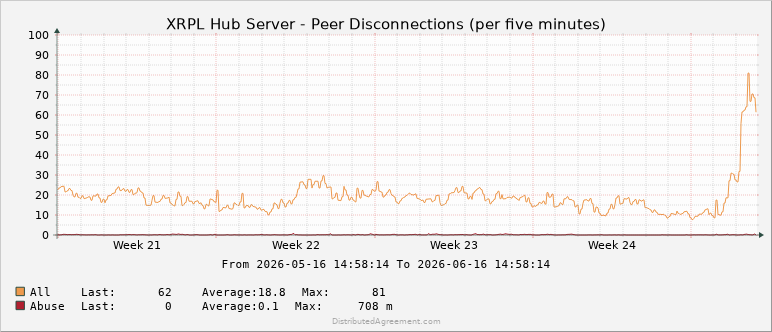
In a tweet, Ripple CTO emeritus David Schwartz confirmed that he upgraded his independent hub server to version 3.2.0.
He initially expected the migration to cause about 10 minutes of downtime. However, the process took roughly 18 minutes because the software needed extra time to shut down safely and avoid database corruption.
Schwartz later reported that the hub was operating normally. He also shared performance data from the past month. The charts showed only one notable event: a brief spike in peer disconnections, which he said was likely caused by a network outage near the hub.
His successful migration is an early indication that the new software is ready for production.
$XRP Army Views Rebranding as Decentralization Milestone
For many in the $XRP community, the name change carries symbolic importance. By removing Ripple references from the software, the $XRP Ledger further separates the decentralized network’s identity from the company that played a major role in its early development.
The release is also said to improve efficiency. Developers reportedly reduced node memory requirements by an estimated 30% to 40%, lowering the hardware needed to run XRPL infrastructure.
Lower resource requirements could make it easier for more participants to operate nodes and validators. In turn, that may encourage greater geographic diversity and further strengthen decentralization across the network.
Ultimately, the transition from rippled to xrpld is another step in the $XRP Ledger’s evolution toward a network whose identity and operations stand apart from Ripple.

 coinfomania.com
 en.bitcoinsistemi.com