
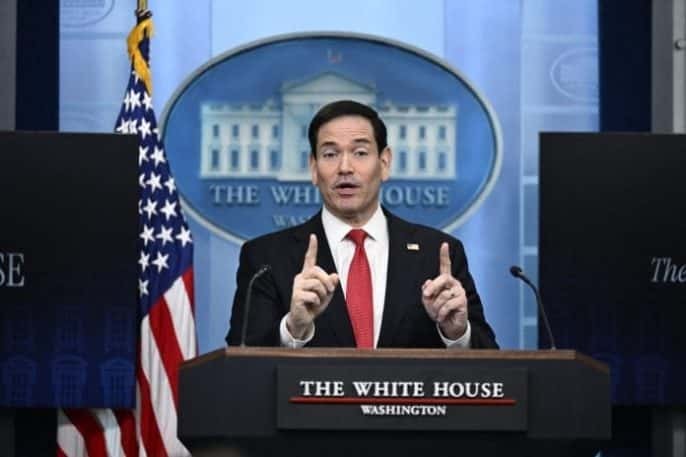

Secretary of State Marco Rubio announced that Washington has imposed sanctions on Chinese entities accused of providing Iran with satellite imagery, intelligence that reportedly supported attacks against US forces stationed in the Middle East. The move represents a significant escalation in the US strategy to sever the technological lifelines feeding Tehran’s military operations.
Beyond the satellite imagery providers, the sanctions also swept up Iran’s overseas arms procurement networks and international companies alleged to have supplied raw materials for the country’s missile and drone programs.
A broader pressure campaign takes shape
These sanctions are part of an intensifying US effort to enforce compliance across global supply chains, with Rubio warning that secondary sanctions await entities that refuse to fall in line with American measures.
China’s Ministry of Commerce issued a directive, effective May 2, 2026, that explicitly prohibited Chinese firms from complying with US sanctions related to Iranian oil trades. The US has been tightening the screws on Chinese refiners since 2025, but the satellite imagery angle introduces a new dimension. Providing commercial satellite data isn’t the same as shipping oil. It’s a direct intelligence capability that, according to Washington, enabled kinetic attacks on American personnel.
Middle East tensions and the oil factor
Iran’s posture around the Strait of Hormuz, through which roughly a fifth of the world’s oil supply passes daily, has continued to rattle energy markets. Rising oil futures have reflected persistent fears about potential disruptions to that critical chokepoint.
What this means for crypto investors
In the 24 hours following the sanctions announcement, Bitcoin climbed 2.1%, reaching $68,400. Stablecoins also stand to benefit from the broader dynamic. In regions affected by sanctions or capital controls, dollar-pegged stablecoins have become practical tools for preserving purchasing power and moving value across borders.
Altcoins and tokens with significant exposure to Chinese supply chains, whether through mining hardware dependencies, development teams, or exchange liquidity, could face headwinds if the US-China sanctions standoff escalates further. The Treasury Department has already demonstrated its willingness to sanction mixer protocols and specific wallet addresses.

 coinfomania.com

 coinpedia.org

 cryptoslate.com
 thecryptobasic.com