


 11
11
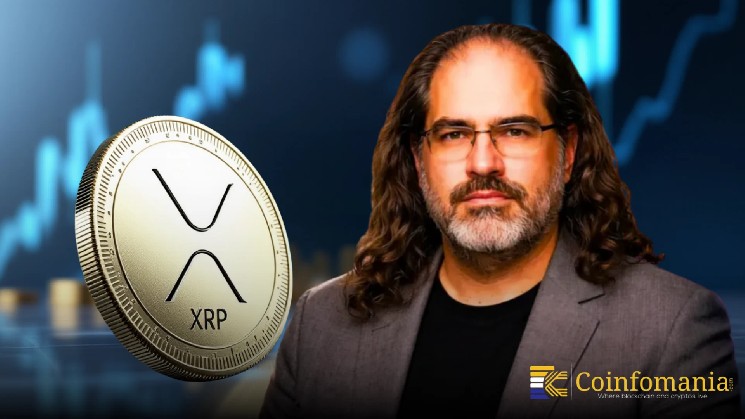
A years-old comment is back in focus, and it is stirring debate again. Ripple CTO Emeritus David Schwartz is responding to claims that he misled the $XRP community. The criticism centers on a 2017 post where he said $XRP “can’t be dirt cheap.”
RIPPLE CTO PUSHES BACK ON $XRP MISLEADING CLAIMS@Ripple CTO Emeritus David Schwartz (@JoelKatz) has rejected claims that he misled the $XRP community.
— BSCN (@BSCNews) April 27, 2026
The criticism stems from a widely debated 2017 post about $XRP pricing logic.
He stated $XRP cannot remain cheap if it handles… pic.twitter.com/PEqxN55tZy
Some users took that as a long-term price signal. Others now question why the asset has not reached those expectations. Schwartz, however, says the message was never about price. It was about how payments work.
What the 2017 Post Actually Said
Back in 2017, David Schwartz explained how value moves through $XRP. He used a simple example. The idea was straightforward.
It *can't* be dirt cheap. That doesn't make any sense. If $XRP costs $1, they'd need a million $XRP which would cost $1 million. If $XRP cost a million dollars, they'd need one $XRP which would, again, cost $1 million. 1/2
— David 'JoelKatz' Schwartz (@JoelKatz) November 20, 2017
No matter the token price, the total value transferred stays the same. He added another key point. “Higher prices make payments cheaper.” This referred to liquidity. When the price is higher, fewer tokens are needed. That reduces friction in large transfers. At the time, the post was seen as a technical explanation. But over the years, it took on a different meaning for some holders.
Why the Debate Returned Now
The discussion resurfaced as users revisited old statements. Some argued that the 2017 logic implied strong future price growth. Others questioned whether the message created false expectations. That led to direct criticism of David Schwartz. In response, he pushed back clearly. “You’re thinking about it from the point of view of an $XRP holder.” He explained that the original comment focused on payments, not investment returns. From a user’s view, price matters for profit. From a system’s view, price only changes how many tokens are used. That distinction sits at the center of the current debate.
Payments Logic vs Investor Expectations
The gap between these two views is important. Ripple built $XRP as a bridge asset for payments. In that role, efficiency matters more than speculation. A higher price can make large transfers smoother. But it does not guarantee price growth. Schwartz stressed that his explanation was neutral. It described how systems behave, not how markets will move.
He also addressed broader concerns about adoption. When asked why banks would use $XRP if it benefits Ripple, he responded: “Yeah, this makes business sense… but we don’t want to do it because it also makes this other company money.” The comment highlighted a basic point. Businesses usually act on utility, not on who else profits.
Bigger Questions Around Crypto Utility
The discussion also touched on competition from stablecoins. David Schwartz acknowledged that stablecoins can work better in some cases. But he pointed out limits. Stablecoins depend on issuers. They can be frozen. They are tied to one currency. By contrast, cryptocurrencies like $XRP can move across regions without those constraints. That makes them useful in certain global payment scenarios. Still, adoption depends on real demand, not theory. However, that is where the story remains unfinished. Years after the original post, the same question still lingers. Not what $XRP should be worth but how much of its intended use will actually take hold.

 crypto.news

 thecryptobasic.com
 1
1