


 6
6
The $XRP Ledger recently handled a sharp rise in transaction activity but consistently maintained low fees and fast settlement times.
XRPL Validator Vet reported that the network processed this large wave of transactions at costs of just a few cents, with consistent settlement speeds of three to four seconds. As a result, he called the XRPL “financial infrastructure that scales.”
Key Points
- The $XRP Ledger processed over 5.17 million transactions in one day, marking a two-year high.
- The network maintained low fees and steady settlement times during the surge.
- Throughput stayed above 140 TPS, with some blocks processing up to 987 transactions.
- Most activity came from the $XRP/$RLUSD pair on the DEX.
- Transaction activity peaked in the afternoon with hourly volumes exceeding 300,000 before slowing by the end of the day.
Surge in XRPL Network Activity
Vet highlighted the latest milestone amid an impressive surge in XRPL on-chain activity throughout this year. He noted that the network maintained throughput above 140 transactions per second during this period. Meanwhile, some individual ledger blocks processed as many as 987 transactions.
Vet pointed out that the $XRP decentralized exchange (DEX) was the main driver behind the spike, especially through the $XRP/$RLUSD trading pair. He explained that most of the activity came from this pair, with automated bots contributing to the increase in transaction volume.
Bot Activity on the XRPL
According to him, market-making bots constantly filled the order book with buy and sell offers. They repeatedly created and canceled orders using the same OfferSequence, and adjusted prices in real time. This added heavily to the total number of transactions recorded on the network.
He also called attention to another tactic involving spoofing, which he called ghost walls. In this case, bots placed orders that appeared to provide liquidity but were not actually backed by real funds.
This could mislead traders into thinking there was more liquidity than there really was, allowing others to buy assets at better prices if traders did not account for slippage. He added that some arbitrage bots ended up trading into these empty liquidity areas.
Transaction Failures by Design
Notably, Vet stressed that a large number of failed transactions was not a flaw, but part of how the system works.
According to him, ghost wall activity is meant to cause these failures. In many cases, cross-currency payments fail because they rely on paths with no real liquidity, since the orders are only spoofed entries. He estimated that about 90% of transaction failures come from this setup.
These failures show how the $XRP Ledger handles situations where liquidity is not available. Specifically, the system is designed to reject such transactions, especially when offers are not properly funded, which helps maintain its structure and reliability.
$XRP Sees 2-Year Peak in Daily Transaction Count
Data from XRPScan confirms Vet’s claims, showing that the network processed up to 5.17 million transactions in a single day.
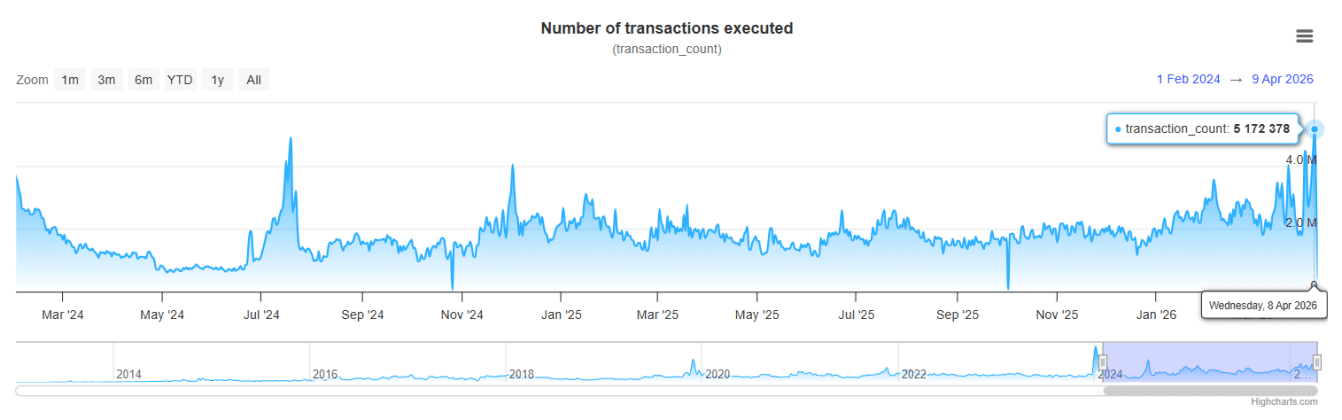
This number pushed beyond the previous yearly high and marked the highest daily total in over two years. Of the more than 5 million transactions recorded, about 4.57 million were successful.
The data also showed that the average number of transactions per ledger rose to 253 during this time, another two-year high. Normally, this figure stays between 60 and 100 transactions per ledger, confirming the large scale of the latest increase.
$XRP Intraday Transaction Trends
After his initial comments, Vet shared details about how activity changed during the day. He explained that transaction levels started low but rose in the afternoon. Despite the surge, the network handled everything smoothly.
In the early hours, transactions stayed mostly below 100,000 per hour, with some spikes reaching between 100,000 and 200,000. This pattern continued until later in the day, when activity picked up.
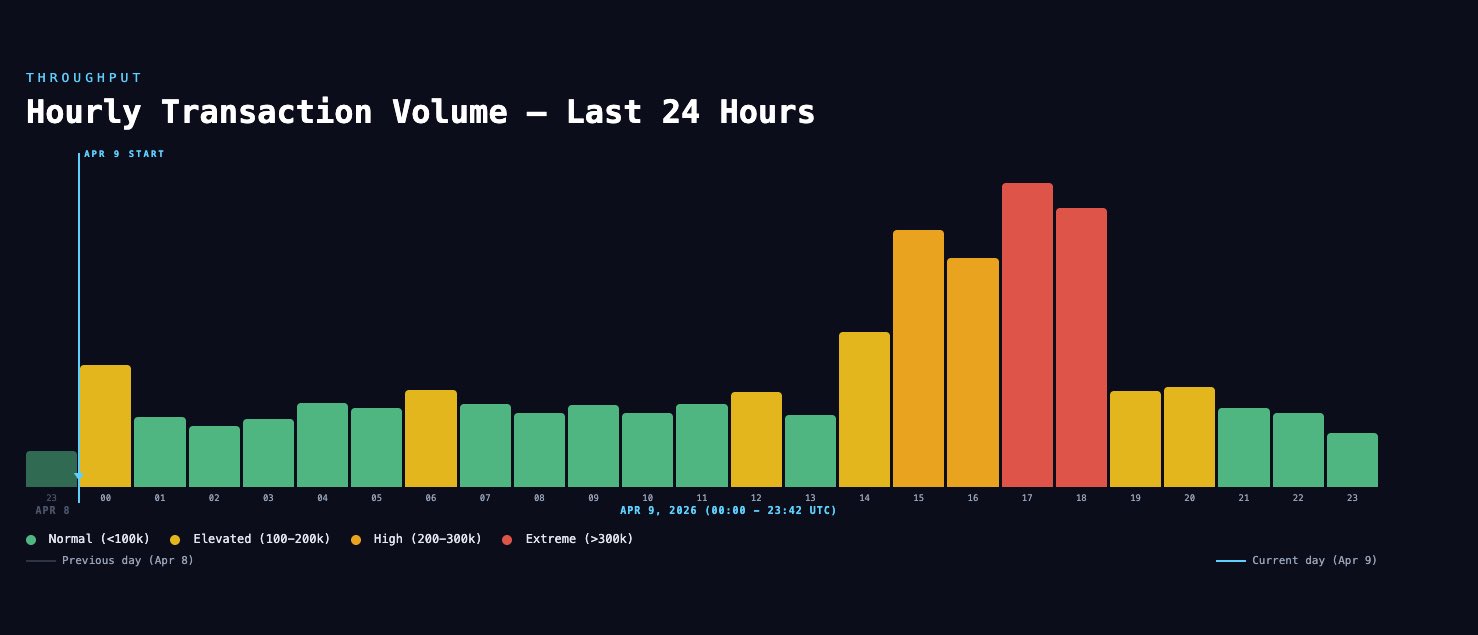
During the peak period, hourly transactions ranged from 100,000 to 200,000 and often increased to between 200,000 and 300,000, with some periods going above 300,000.
As the day moved into the evening, activity began to slow down. $XRP Ledger transaction levels dropped back to between 100,000 and 200,000 per hour, and eventually returned to below 100,000 by the end of the day.

 en.bitcoinsistemi.com
 1
1


 neonewstoday.com