



 4
4
Avalanche ($AVAX), a layer-1 blockchain once viewed as a rival to Ethereum in 2021, has seen its price fall more than 94% from its all-time high ($ATH). By 2026, the question remains whether any catalysts can help this altcoin stage a comeback.
Behind the disappointing price performance, infrastructure developments and growing institutional adoption are shaping a potentially promising recovery scenario for the ecosystem.
A Boost From Japan: When $2 Billion Moves “On-Chain” With Avalanche
One of the most significant developments strengthening Avalanche’s position is Progmat’s decision to migrate its assets to Avalanche, Japan’s largest digital securities (security token) platform.
More than $2 billion in tokenized real-world assets (RWA), including real estate and corporate bonds, are moving from the Corda platform to Avalanche.
An Avalanche report states that Progmat currently accounts for approximately 63% of issuance volume and 53.8% of projects in Japan’s digital securities market, with total issuance value exceeding ¥216.9 billion. The market is expected to surpass ¥1.05 trillion (approximately $7 billion) by the end of 2026.
Progmat’s decision to choose Avalanche over competing platforms represents a strong endorsement of Avalanche’s technology. The network enables financial institutions to create customized blockchains that comply with regulations while leveraging the security of the main network.
How VanEck Views Avalanche
A recent report from investment firm VanEck outlines the reasons Avalanche continues to maintain its appeal.
VanEck highlights that the system’s core lies in its Snowman consensus mechanism. This mechanism allows block production in just 1.2 seconds and achieves near-instant transaction finality.
“Avalanche competitor Ethereum produces blocks every 12 seconds while finality takes around 12.8 minutes. This allows Avalanche users to recognize settlement of their transactions within a few seconds, giving the chain significant practical advantages for financial use cases,” the VanEck report states.
The report also emphasizes that Avalanche’s lower transaction fees compared to competitors provide a competitive advantage.
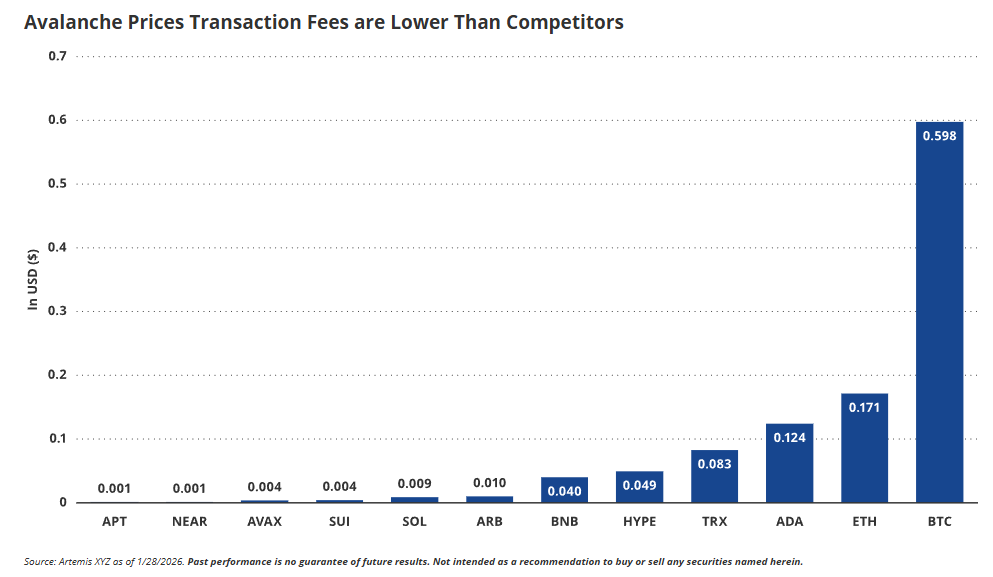
In addition, VanEck’s spot Avalanche ETF remains the only $AVAX ETF currently trading on the market.
However, data indicate that investor demand for exposure remains modest. After one month of trading, total net assets reached $11.5 million. By comparison, LINK ETFs have attracted more than $81 million, while SOL ETFs have surpassed $800 million.
Can $AVAX Regain Its Former Glory?
A report from CryptoRank shows that among leading altcoins, $AVAX and DOT have experienced the worst drawdowns, each exceeding 94%. Such a decline represents a major shock for many investors.
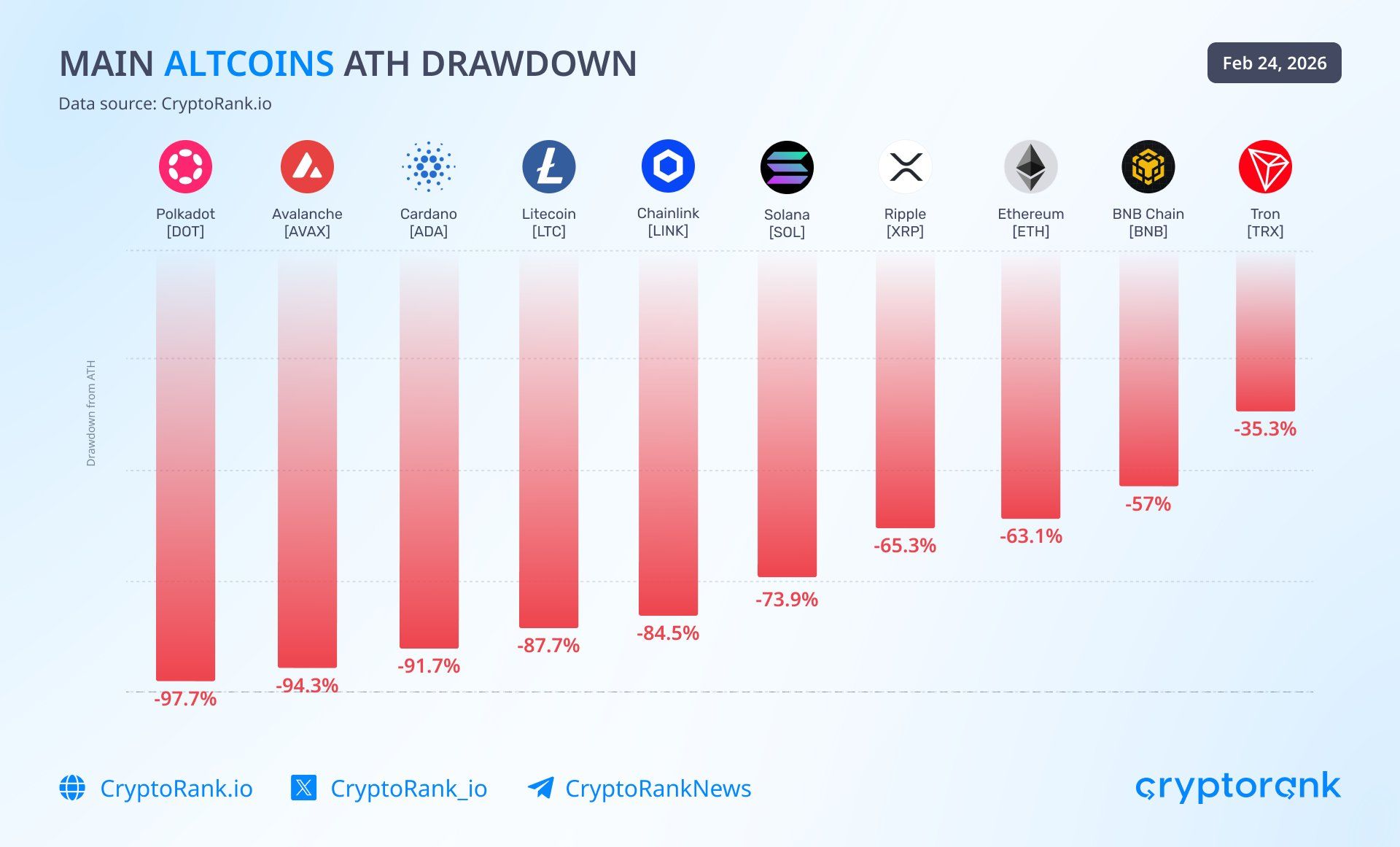 $ATH Drawdown. Source: CryptoRank">
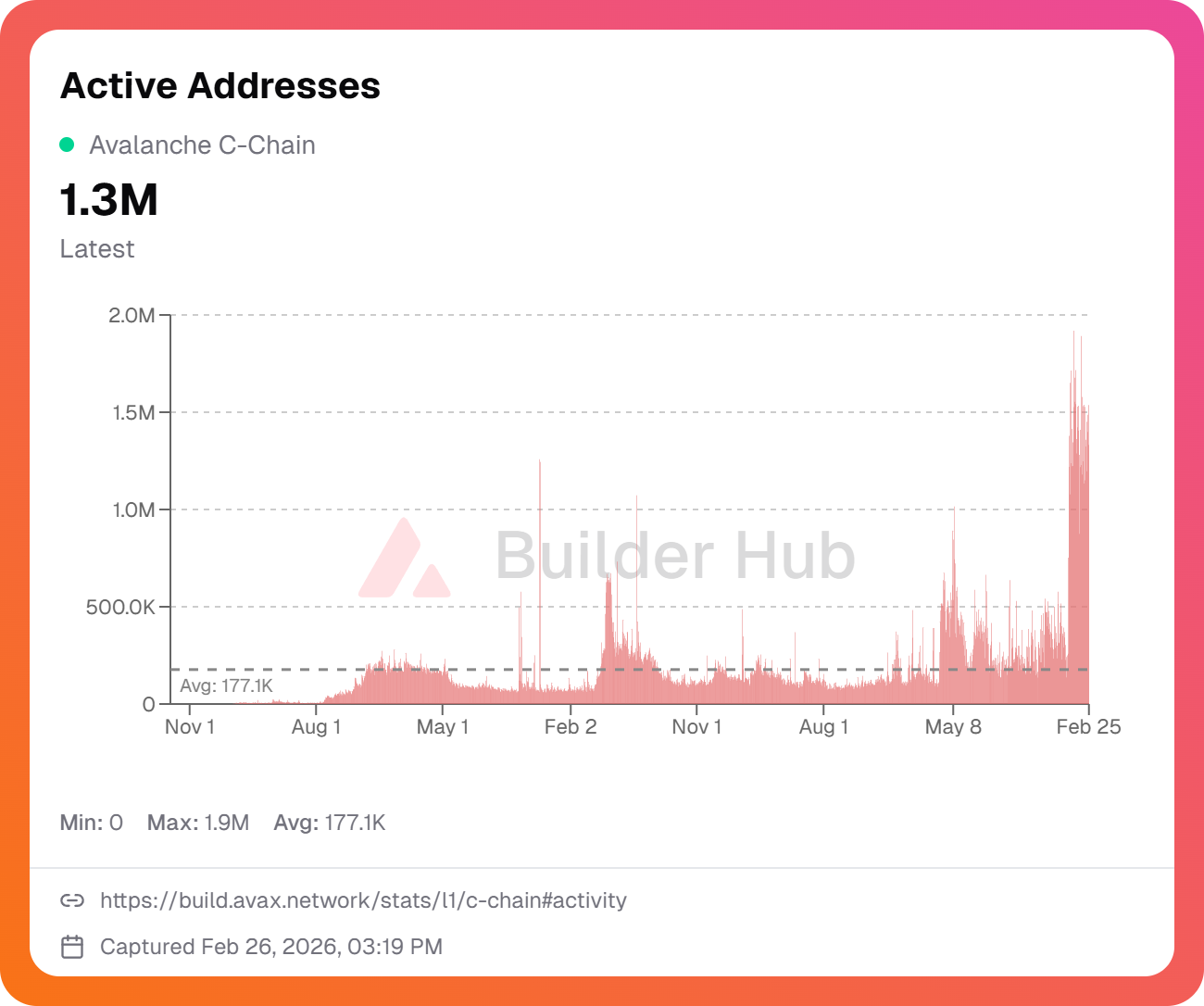
However, Data from Avalanche signals positive momentum in February as users return to the network. Daily active addresses climbed above 1,300,000, marking the highest level in this layer-1 blockchain’s history.
“$AVAX’s new slogan should be: Believe in the tech, not in the price,” investor Emperor Osmo stated.
A recent report by BeInCrypto also points to widespread negative sentiment, prompting many investors to hesitate before allocating capital. However, when capital flows return, projects with strong fundamentals may become priority choices for investors.
The post What Could Drive Avalanche ($AVAX) After a 94% Drop From Its All-Time High? appeared first on BeInCrypto.

 crypto-news-flash.com

 u.today
